






An outdoor HVAC condenser unit on a concrete pad in front of a two-story suburban house.

Heat Pump Installation in Bay St. Louis, MS

Tell us about the job

Takes about a minute. No obligation.

New system or replacementHeat PumpHancock County, MS
Step 1 of 2

What ZIP code is the job in?

Almost every home in Hancock County heats with electricity, 89.1% by the last count. Gas barely has a footprint here, just 7.3% on utility lines and 2.6% on bottled or tank LP. A heat pump fits that pattern because it runs on electricity already, so there's no gas line to add or remove. For a home that already heats electrically, swapping in a heat pump is a change in equipment, not a change in fuel.

5 months
November through March, your system heats
7 months
April through October, it cools
43°F
the average winter night it heats against
90°F
the average summer afternoon it cools against
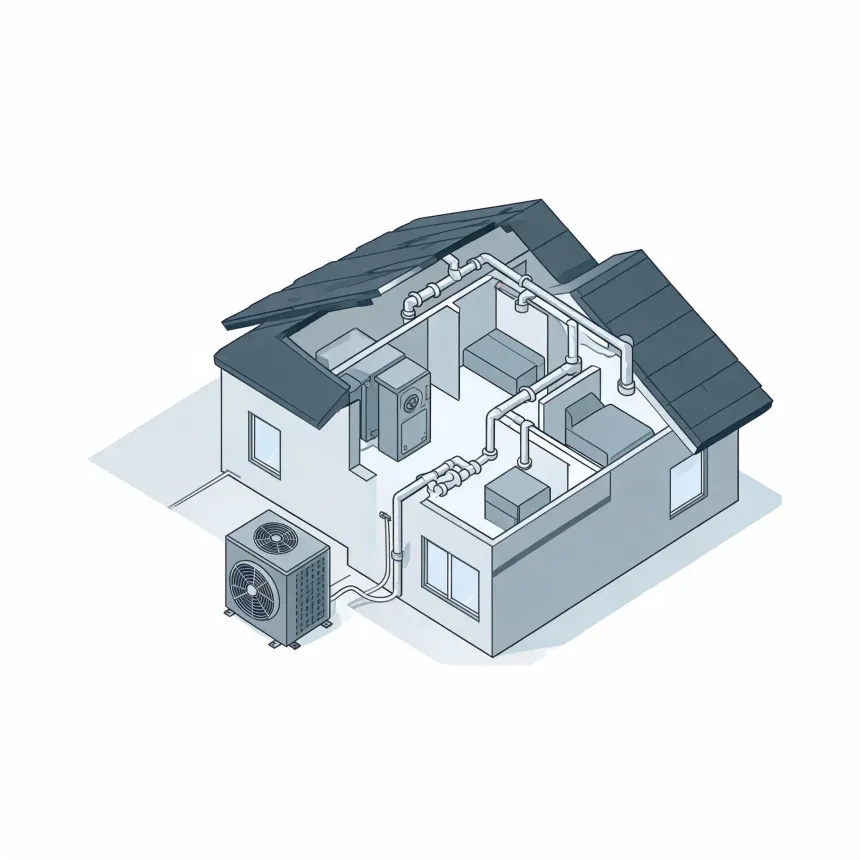
Isometric grayscale illustration of a cutaway two-story house showing interior ductwork, an indoor air handler unit, and an outdoor condenser unit on a pad beside the building.
Your system heats November through March and cools April through October.

NOAA nClimDiv, 1991–2020 normals

Cooling starts in April here and runs seven months straight.

Put the heat pump in during March and it's already working on day one.

Twenty years of storms here, and none of it changes what size heat pump this house needs

52 severe weather events from 2015 to 2024
30% of homes statewide lost power a day or more in 2024
20 damaging wind events from 2015 to 2024
Power is cheap hereMississippi electricity ran 13.39 cents a kilowatt-hour in 2024.

Hancock County is zone 2A, hot and humid, where cooling carries the year. Any split-system heat pump installed here has to meet 14.3 SEER2 for cooling, a federal minimum that applies no matter who installs it. Straight central air conditioners sold in the Southeast have to clear a higher bar than the rest of the country, since this region runs its cooling so hard. A heat pump headed for a home in Bay St. Louis already has to meet that standard before it gets here. That narrows what a contractor can offer, but it also means nothing substandard is on the table to begin with.

Cheap power means fit matters more than efficiency ratings

Electricity here runs 13.39 cents a kilowatt-hour, cheaper than most of the country. That changes what's worth paying for. A heat pump priced higher for a slightly better efficiency number takes longer to earn that back when power already costs less. What matters more is getting the size and the install right for this house. Have a contractor look at the place and work out what fits.

Find a contractor
A man in a navy T-shirt, tan work pants, boots and a green cap climbs porch steps toward a blue front door, carrying a canvas tool bag beside a blue planter with a small shrub.
A residential heat pump outdoor unit mounted on a concrete pad next to a house with gray vinyl siding.

This one doesn't get a season off

A heat pump runs every day of the year, not just in the coldest or hottest stretch. It switches between heating and cooling as the seasons turn, and the compressor inside it is working on both ends of that. More running hours means more cycles, and cycles are what wear a compressor, a reversing valve, a fan motor. None of that is a reason to expect trouble. It's a reason the install matters. A unit sized right for the house cycles on and off the way it should. One sized wrong, too big or too small, runs longer than it needs to or short-cycles constantly, and either way that shortens the life of the parts doing the work.

The house sets the number, not the brochure

The right size for a heat pump comes from a room by room look at the house. How much glass it has. Which walls face sun. How much attic insulation is up there. How air leaks in and out. Houses the same square footage can still need different sized equipment. A contractor works this out with a load calculation, not by matching the new unit to whatever size is currently installed.
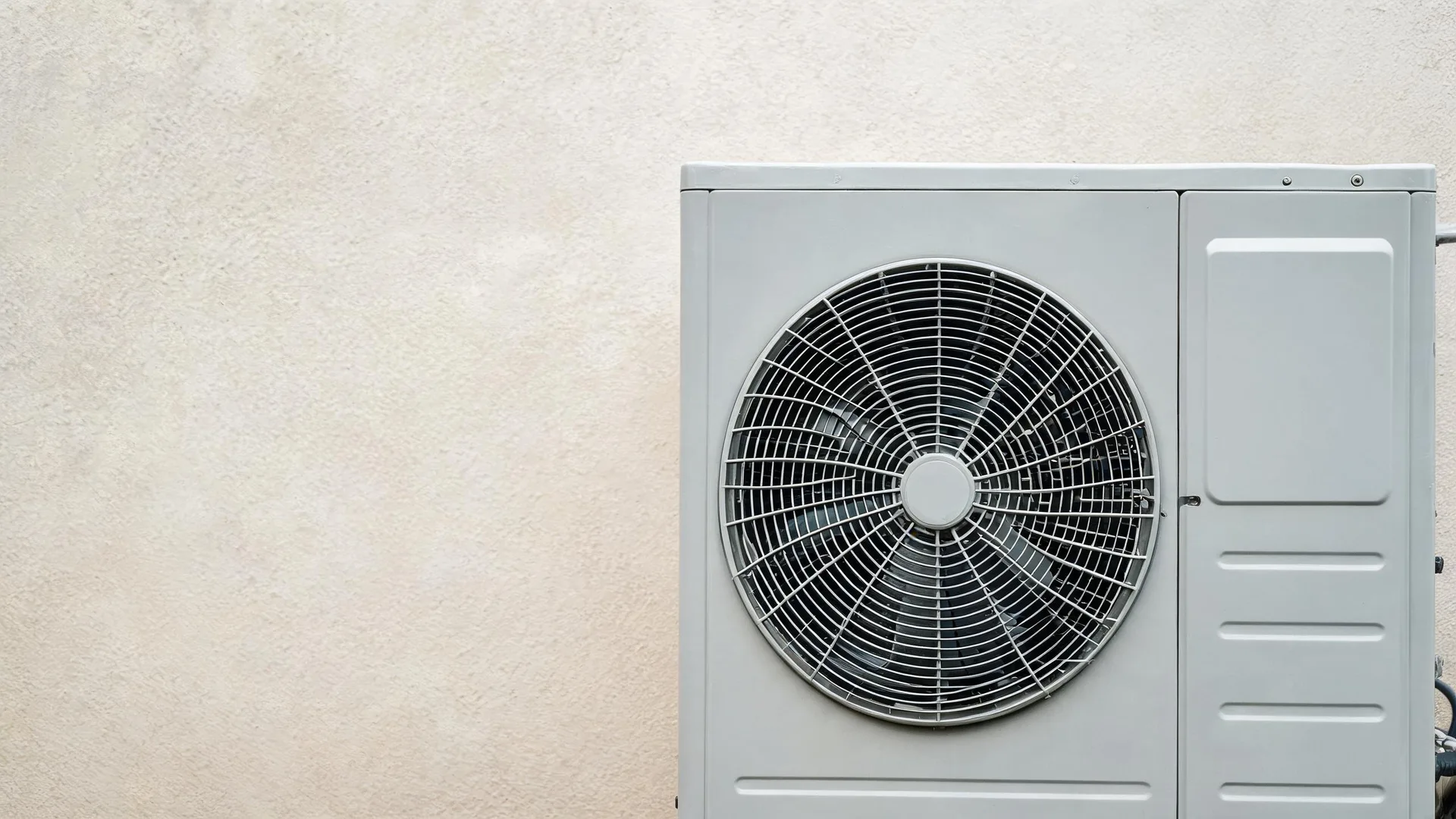
Oversized is its own problem, not a safety margin

A heat pump that's too big cools the air fast and shuts off before it pulls the moisture out of it, so the house feels cool and damp at the same time. It cycles on and off more than it should, and every start and stop puts wear on the compressor. Bigger isn't a cushion here. It's a unit working against itself.

The old equipment doesn't get left behind as scrap with no thought given to it. Refrigerant in the old system has to be recovered into a tank before anything gets cut loose, never vented to the air, and that's not optional, it's how refrigerant handling works. Once it's recovered, the old condenser, the coil, the line set all come out, and most of that is metal a scrap hauler will take. If the system had a furnace paired with it and that furnace stays, only the coil and outdoor unit come out, the furnace keeps running the blower side of things same as before. A straight swap, furnace and all, means everything from the old setup goes. Either way, what comes out of the house shouldn't still have charge in it when it leaves.

Install day starts outside, with the old condenser and line set coming out, and inside with the air handler or furnace coil swapped if the system is changing over to a heat pump setup. The refrigerant lines usually get replaced or at least cleaned and pressure tested, since old oil and debris in the lines can contaminate a new system fast. Once the new equipment is set, the contractor pulls a vacuum on the line set to clear out moisture and air before any refrigerant goes in. That vacuum has to hold steady, and rushing it is how you end up with a system that's lost its charge in a year. After charging, the unit gets run through both modes, heating and cooling, with readings taken on airflow, pressure and temperature split at the vents. A thermostat gets set up last, paired to the new equipment rather than just left on whatever was running the old one. None of this is quick, and a contractor who's thorough about the vacuum and the charge is doing the part that decides how the system runs for years, not just on day one.