




Single-story buildings with pale siding and one brick section with a covered porch stand behind a trimmed hedge and lawn, under a large moss-draped oak branch.

Furnace Repair in Southaven, MS

Tell us about the job

Takes about a minute. No obligation.

RepairFurnace or heatingDeSoto County, MS
Step 1 of 2

What ZIP code is the job in?

Southaven asks a furnace to work about five months a year, November through March. That's a shorter season than a lot of the country gets, and it shows in how these units hold up. Overnight lows average 34°F through December, January and February, cold enough to run the system hard but not the kind of deep freeze that wears parts down fast. A furnace here spends most of the year resting. So when one starts acting up, the cause is usually something specific, an igniter, a flame sensor, a pressure switch, not a system worn out from overuse. That's the kind of problem worth fixing rather than replacing.

5 months
November through March, your furnace is on duty
34°F
the average winter night it heats against
55%
of homes here heat with gas, so most furnaces here burn gas
14 winter storms
in ten years, the nights a failure hurts most
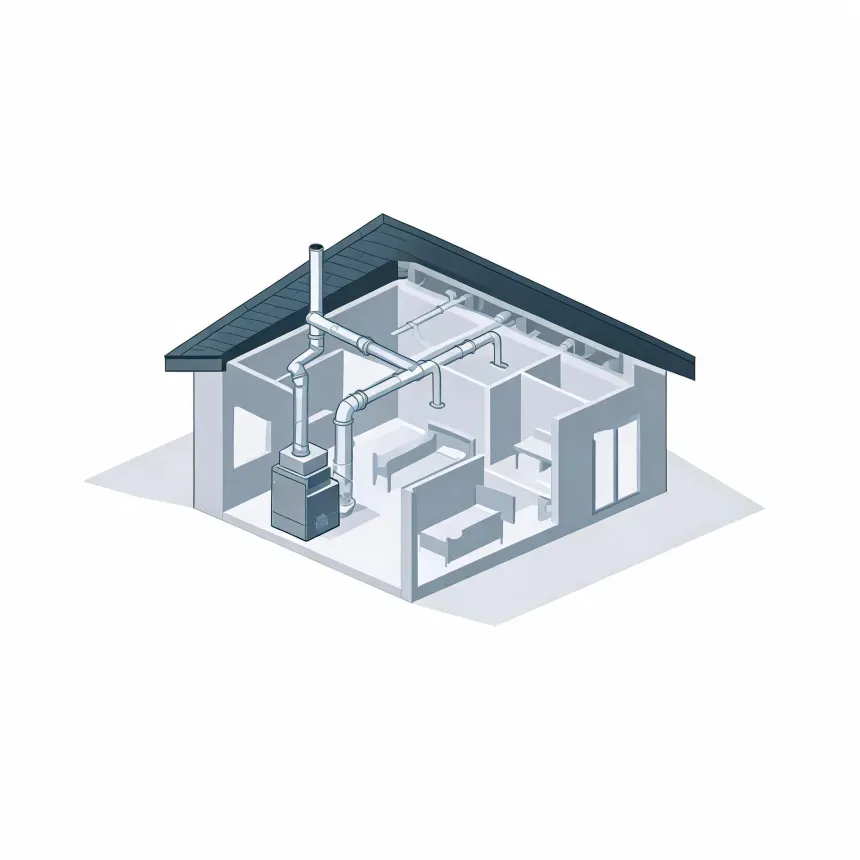
Isometric cutaway illustration of a small single-story house showing interior rooms, a furnace unit with a flue, and connected ductwork running below the dark gabled roof.
Your furnace works hardest from November through March.

NOAA nClimDiv, 1991–2020 normals

Half the homes in DeSoto County were built in 1999 or later.

A furnace that came with a newer house still has working life in it, and that's worth checking before anyone talks replacement.

DeSoto County sees its share of storms

99 severe weather events from 2015 to 2024
30% of homes statewide lost power a day or more in 2024
50 damaging wind events from 2015 to 2024

October is worth a look before heat season starts. The first cold snap is when a weak part usually fails, not before. A cracked heat exchanger, a failing igniter, a pressure switch on its way out, these tend to stay quiet all summer and then quit the moment the furnace gets asked to run. If yours struggled to keep up back in March, or made a noise you noticed and then forgot about, that's worth mentioning to whoever comes out. Getting it looked at in October means finding out now, not on the first cold night of the season.

A furnace that only works five months a year is usually worth fixing

Get a repair call in before the next cold snap finds the weak part first.

Find a contractor
A man in a dark long-sleeved shirt and tan work pants, seen from behind, carries a canvas tool bag up porch steps toward a blue paneled front door of a house with light lap siding and a potted flowering plant.
A gray residential gas furnace installed in an unfinished basement, connected to sheet-metal ductwork and PVC pipes.

What a furnace tells you before it quits

A furnace spends most of its day doing nothing, then switches on and runs until the thermostat is satisfied. That start is the hard part. The igniter heats up. The gas valve opens. The flame sensor confirms there's a flame, and the blower kicks on to push air through. Parts that fail usually fail at that moment, not partway through a long run. A delay before the burner lights is worth noticing. So is a clicking that repeats more than a few times, or a flame that catches and then drops out. A blower that keeps running after the burner shuts off points somewhere else, often a limit switch not resetting the way it should. None of these mean the whole system is done. They mean one part is asking for attention before it takes the rest of the cycle down with it.

What you can check safely

Make sure the thermostat is set to heat and the setting is above room temperature. Check the air filter and swap it if it's gray or caked with dust, a clogged filter can starve the system and trip a safety switch. Look at the furnace door, it has to sit fully closed and latched or the unit won't run at all. If you have a switch on the wall nearby that looks like a light switch, make sure it's on, that's often the furnace's power cutoff. Check the breaker for the furnace in your panel too.

What to leave alone

Don't open the burner compartment or touch the igniter, the flame sensor or the gas valve. If you smell gas, don't flip switches or look for the leak yourself, leave the house and call the gas company from outside. A furnace that short cycles, makes a banging noise at startup, or trips its breaker repeatedly needs a tech, not another attempt to reset it. Resetting a safety switch over and over without knowing why it tripped can turn a small problem into a bigger one.

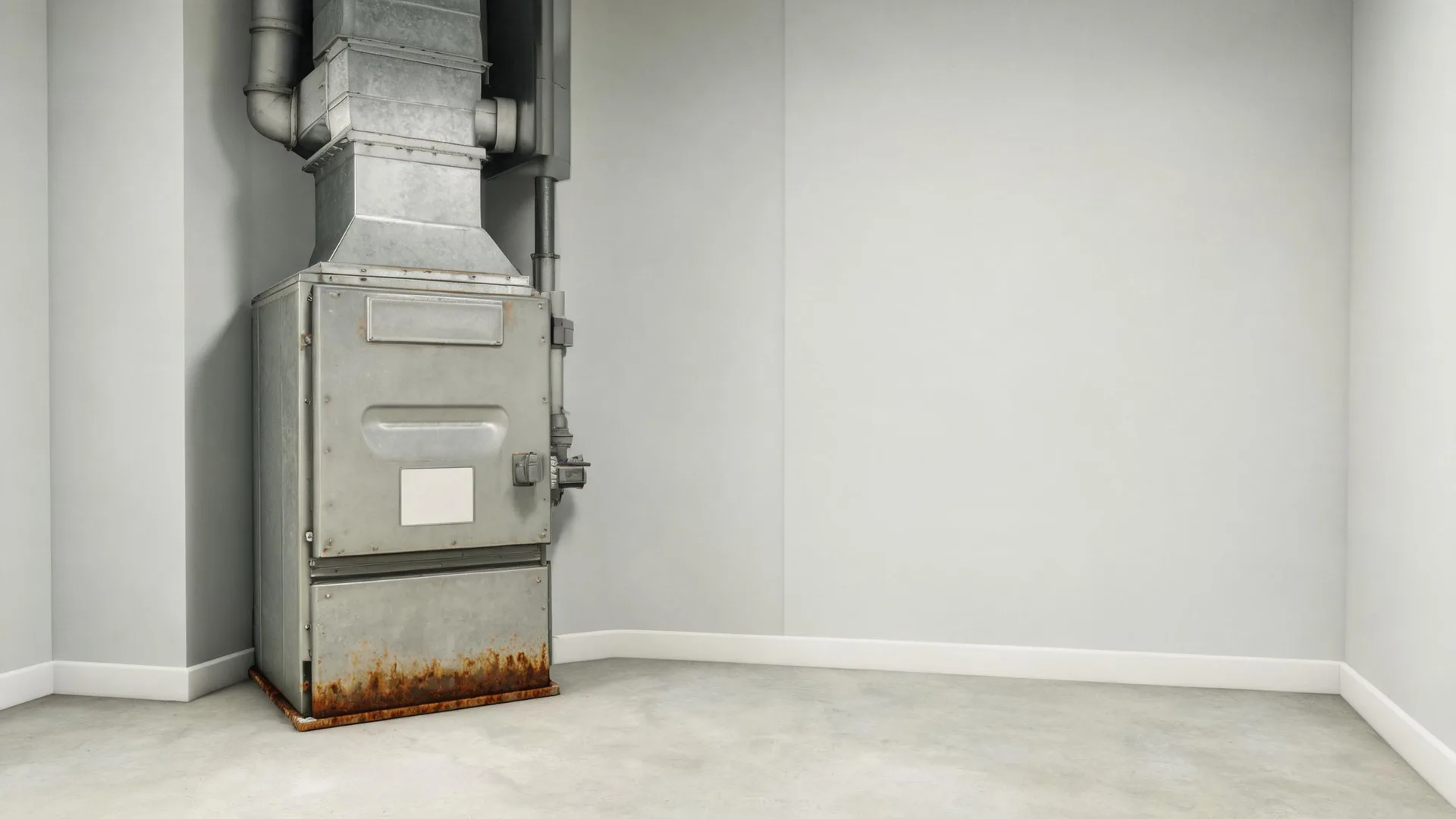
An empty unfinished basement containing a forced-air furnace with overhead ductwork, exposed ceiling joists, and a single hanging light bulb.

A new furnace would cut about $120 a year off heating for a typical DeSoto County home.

  • A new high-efficiency furnace$540 a year
  • An older furnace$660 a year

Estimates for a typical DeSoto County home, compared with an older unit built to the previous federal minimum, from EIA household energy data, Mississippi fuel prices and NOAA climate normals. Your home will differ.

Repair makes sense when one part has failed and the heat exchanger is sound.

Replacement makes sense when the heat exchanger is cracked or the furnace keeps needing parts.

A diagnostic call starts before any panel comes off. The tech asks what the furnace was doing, a smell, a sound, a short cycle, and when it started. Then the furnace door comes off and they watch it run through a full cycle. They want to see ignition, the burner flame, the blower coming on, in that order. A failing igniter might glow weak or not light at all. A flame sensor coated with residue will let the burner light and then cut out a few seconds later, and a tech can confirm that with a meter rather than guessing. Pressure switches, the control board and the wiring get checked too, because a fix that skips the real cause usually fails again within the week.