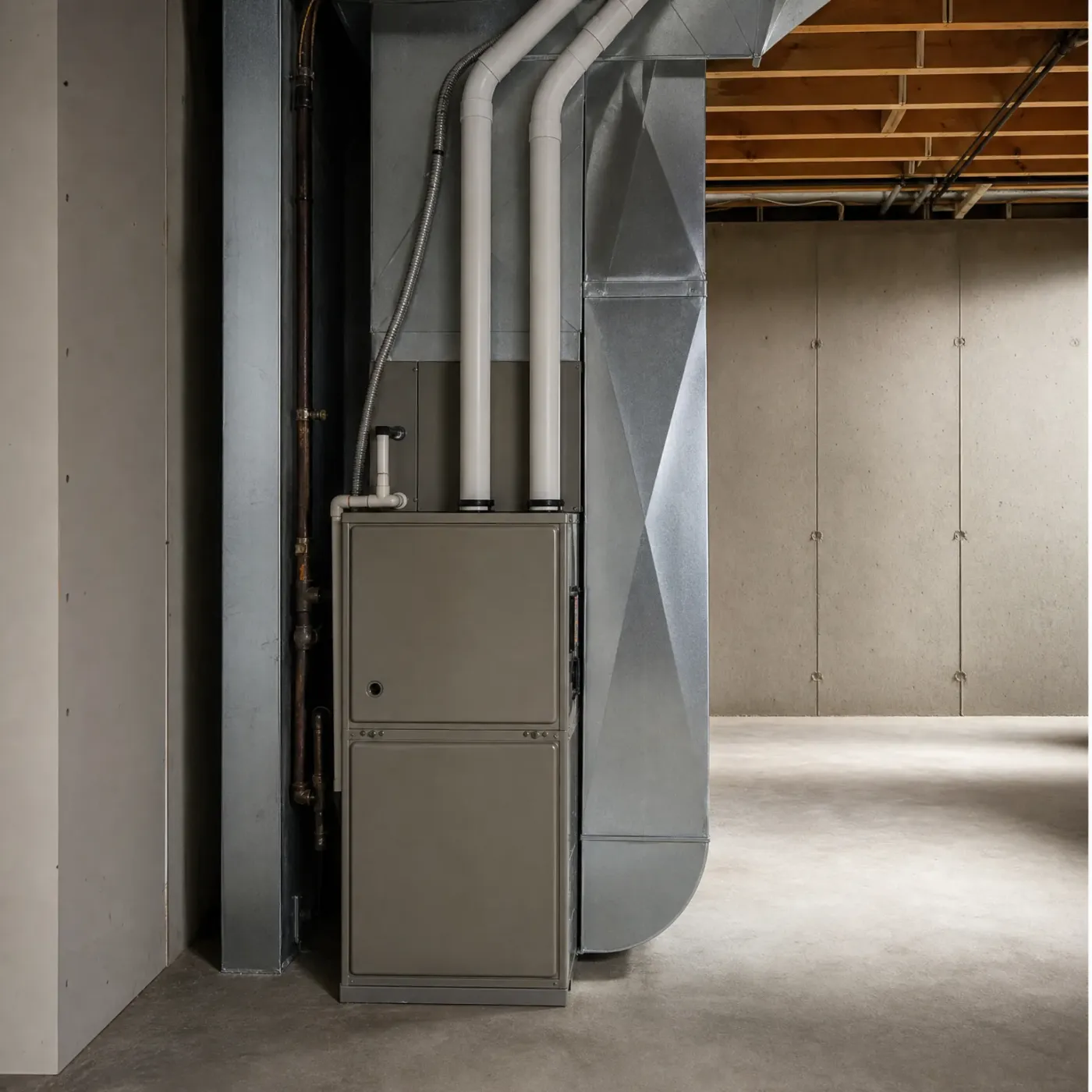
When a furnace flame sensor needs cleaning in Mississippi
A furnace flame sensor needs cleaning about once a year, usually at the start of the heating season, and most furnace technicians will check it during a routine fall tune-up. The sensor is a thin metal rod near the burner that confirms a flame is present so the gas valve stays open. Over months of use it collects a thin film of soot and oxidation, and once that film builds up, the sensor can't read the flame anymore, even though the flame is burning fine. When that happens the furnace shuts off a few seconds after starting, sometimes over and over, which is the clearest sign the sensor needs attention now rather than waiting for the next scheduled visit. Since most homes in Mississippi heat with electric furnaces or heat pumps rather than gas, this only applies if your system runs on gas. If yours does, catching it early keeps the furnace from short-cycling on cold mornings.
A clean sensor reads the flame right away, so the furnace fires and stays lit without any short cycling.
A coated sensor can't hold the flame, so the burner shuts off seconds after startup and won't stay running.
The flame sensor proves the fire is burning by running a small current through the flame itself. The control board reads that current and keeps the gas valve open as long as it sees it. Over a season of burner cycles, soot and oxidation settle on the rod. That coating gets between the rod and the flame, and the signal gets weaker even though the furnace is burning fine. The board only waits a few seconds for that proof before it shuts the gas off, so a weak signal reads as no flame at all. That's what causes a furnace to fire, run briefly, and cut out again and again. Clearing the rod takes fine steel wool or emery cloth, never sandpaper, which can scratch it and make the buildup worse next time. The sensor sits right in the burner flame, but it has no connection to the igniter. A furnace can light fine and still shut down on sensor trouble, since the two parts are doing entirely different jobs.
How the Flame Sensor Works
The flame sensor works by passing a tiny electrical current through the flame itself, a process called flame rectification.
Soot and oxidation build up on the rod over months of burner cycles, and that coating blocks the current the control board is reading.
The control board gives a new furnace a few seconds to prove flame before it shuts the gas valve as a safety measure.
Cleaning the rod means taking it out of the burner assembly and wiping it with fine steel wool or emery cloth, not sandpaper.
A furnace that locks out repeatedly after short bursts of flame is often telling you the sensor can no longer read the fire.
The rod sits in the path of the burner flame but carries no wiring to the igniter, so sensor trouble and ignition trouble are separate problems.
Before you get your furnace maintenanceAfter you get your furnace maintenance
A pro who works on furnaces
Once you send the form, finding a pro is off your list.
A local pro who services furnaces gets in touch about the tune-up.
Why does your furnace keep shutting off on its own
If your furnace starts, runs for a few seconds or a minute, then shuts off and tries again, that's short cycling, and a dirty flame sensor is the most common reason. You might notice the house never quite gets warm because the burner keeps interrupting itself instead of running a full cycle. Some furnaces will flash an error code on the control board when this happens. Left alone, the furnace works harder to reach the thermostat setting, and on the coldest nights that matters more, since most homes in Mississippi heat with electricity and a furnace that won't stay lit means rooms stay cold while the system keeps trying and failing.
Running the way it should
The furnace fires once and stays on. Air moves through the ducts overhead without the burner cutting out partway through a cycle. With most Mississippi homes heating on electricity, a furnace that holds its flame is doing what it's supposed to, nothing more needed from you right now.
A sensor losing the signal
Panels stay closed, pipes and conduit sit untouched, and nothing looks wrong from the outside. Inside, a coated flame sensor is telling the control board no flame is there when one is. The burner shuts off, tries again, and the cycle repeats until the rod gets cleaned.
How do I know if my furnace flame sensor needs cleaning
You've noticed your furnace acting up, maybe shutting off after running a few seconds, and you're wondering if the flame sensor is the reason or if something else is going on. You want a way to check without waiting on a guess.
Short cycling and a slow pilot light-up are the two signs
If the burner lights, runs a few seconds or up to a minute, then shuts off and tries again, that's the clearest sign the sensor needs attention. You might also see the flame hesitate before it catches, or the furnace lock out after several failed attempts and need the power cycled to reset it. None of this means the sensor is broken. It almost always means it's coated with soot and can't read the flame fast enough to tell the control board to keep the gas valve open. A furnace that fires once and runs straight through its cycle without interruption has a sensor doing its job.
Winter nights average 38°F statewide
Nights here average 38°F through December, January and February, not the hard freezes some states see. Your furnace isn't running flat out all winter, but it still cycles on most nights, and that's exactly what builds up the coating on the flame sensor over a season.
NOAA nClimDiv 1991-2020 county normals weighted by homes
A flame sensor doing its job runs quiet
A furnace that starts once and stays running is a flame sensor reading the flame the way it should. No short cycling, no burner cutting out before the house warms up. That's the whole answer, and once a year, at the start of winter, is when that rod tends to need attention again.
If yours has started shutting off early, you don't have to figure out on your own whether it's the sensor or something else in the furnace. A contractor who works on these systems in Mississippi homes can look at yours and tell you plainly what it needs. You'll be matched with one who takes on jobs like this, and they'll reach out to you directly.