






Two white Southern-style homes with wraparound porches lit by landscape lighting at night, flanked by live oak trees hung with Spanish moss.

Heat Pump Repair in Southaven, MS

Tell us about the job

Takes about a minute. No obligation.

RepairHeat PumpDeSoto County, MS
Step 1 of 2

What ZIP code is the job in?

Most heat pump failures come down to a handful of parts. The reversing valve is the one unique to a heat pump, and when it sticks, the system gets stuck heating when you want cooling or the other way around. The defrost board and sensor are another weak point. If they fail, the outdoor coil can ice over and never clear, and you'll feel it as weak heat or a unit that runs constantly without catching up. Low refrigerant charge from a slow leak shows up as the system running long cycles and still falling short. The capacitor that starts the compressor and fan motors wears out over time too, and when it goes, the unit may hum but not start, or not start at all. A dirty outdoor coil forces everything to work harder and ages the compressor faster than it should.

5 months
November through March, your system heats
5 months
May through September, it cools
34°F
the average winter night it heats against
90°F
the average summer afternoon it cools against
Isometric line illustration of a cutaway single-story building showing interior rooms, ceiling ductwork, an indoor air handler, and an outdoor condenser unit connected by refrigerant lines.
Your system heats November through March and cools May through September.

NOAA nClimDiv, 1991–2020 normals

Southaven switches over in November, so the heat pump hits its first cold stretch after sitting idle since spring.

A weak defrost board or a low charge that was tolerable in October tends to show itself in the first hard freeze.

Half the homes here are new enough that the heat pump probably has years left in it

Half the homes here were built by 1999
Power costs 13.39 cents a kWh statewide
Climate zone 3A
Worth fixing, not replacingIf your heat pump came with the house, there's a good chance it still has years left in it.

DeSoto County has logged 99 severe weather events between 2015 and 2024, and a good share of those were damaging wind and hail. A hailstorm can dent the fins on the outdoor unit or bend the coil, and bent fins choke airflow slowly enough that you might not notice until the unit is running constantly just to keep up. Wind-blown debris does similar damage, or it can knock the unit out of level, which strains the compressor mounts over time. If your heat pump has been through a storm this year, even one you shrugged off, it's worth having someone check the coil and the cabinet before the next cold snap finds the weak spot for you.

Get it looked at early

Problems tend to show up in the first weeks of the season, when the load hits a part that was already weak.

Find a contractor
A person in a dark long-sleeved shirt and tan pants, seen from behind, carries a worn canvas tool bag up stone steps toward a blue front door with a shrub in a blue planter beside it.

What you can check yourself

Look at the outdoor unit first. Clear away leaves, grass clippings or anything piled against the cabinet, since blocked airflow makes the whole system work harder. Check the air filter inside and swap it if it is gray or clogged. Walk around the vents and make sure none are closed or blocked by furniture. Look at the thermostat setting and the mode, since a system set to cool when you want heat will act like something is broken when nothing is. If the outdoor unit is caked in ice outside of a normal defrost cycle, or still iced over after a few hours, that is worth noting for whoever comes out.
What to leave alone

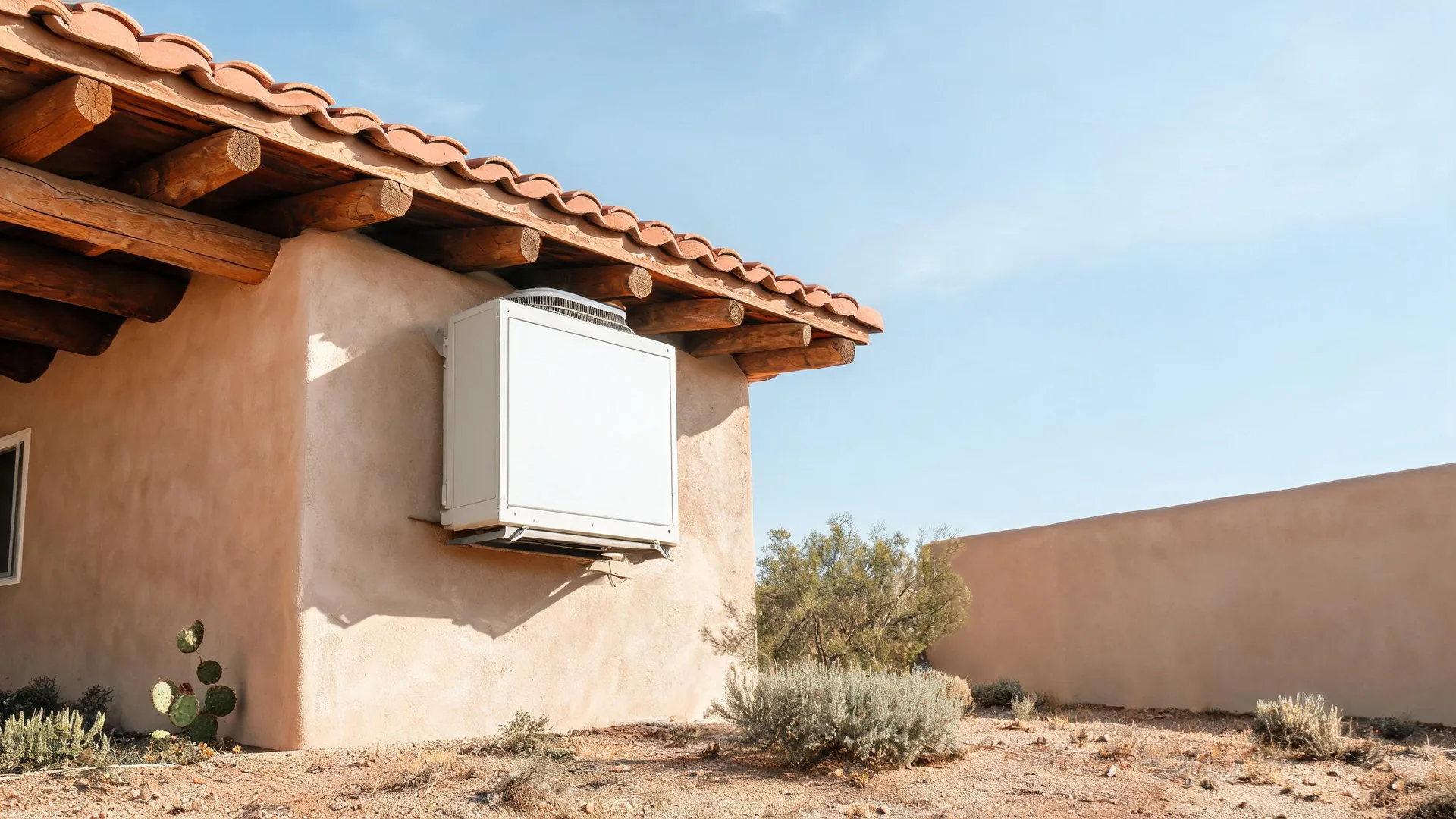
Do not pull panels off the outdoor unit or touch anything inside the cabinet. The electrical components in there can hold a charge even with the power off, and refrigerant lines are not something to open on your own. If you smell something burning, hear grinding or clicking that was not there before, or see the outdoor fan not spinning at all, turn the system off at the thermostat and wait for a tech rather than running it to see what happens. Running a heat pump with a bad part rarely fixes itself, and it can turn a small repair into a bigger one.

Most of the time, you notice a heat pump is in trouble before you know why. The air coming out of the vents feels cool instead of warm, even though the thermostat says it's heating. That's usually the reversing valve, not the whole system failing. Short cycling is another one, where the unit kicks on, runs a few minutes, and shuts off again without ever really warming the house. You might also hear it running nonstop in cold weather and still losing ground, which points to a low charge or ice built up on the outdoor coil. A hum from the outdoor unit with no fan movement usually means the capacitor is on its way out. None of these mean the system is done. They mean a specific part is failing, and most of them are worth fixing rather than living with.

A diagnostic visit starts outside at the unit itself, checking refrigerant pressures and electrical readings before anything gets taken apart. A tech will run the system in both modes, heating and cooling, to see whether the reversing valve actually switches when it's told to. They'll check the defrost cycle too, since a board that won't trigger defrost or won't end it is often the real reason behind weak heat. Temperature readings at the supply and return vents tell them whether the coil is doing its job or whether something upstream is starving it of airflow. Most of this gets diagnosed with gauges and a multimeter, not guesswork, and a tech can usually narrow it down to one part before any panel comes off for the repair itself.