A large outdoor air-conditioning unit mounted beside a vinyl-sided house, surrounded by mulched garden beds and green shrubs.

Heat Pump Repair in Philadelphia, MS

Tell us about the job

Takes about a minute. No obligation.

RepairHeat PumpNeshoba County, MS
Step 1 of 2

What ZIP code is the job in?

The tech checks the whole system, not just the symptom

A heat pump that won't heat might have a problem in the compressor, the reversing valve, the refrigerant charge, or the thermostat wiring. The tech hooks up gauges, checks pressures and temperatures at the lines, and tests the electrical components before deciding what's actually wrong. Guessing from one symptom leads to the wrong fix.


What the diagnosis tells you

Once the tech finds the cause, you'll know whether it's a quick repair like a failed capacitor or contactor, or something bigger like a dying compressor. That matters because it tells you whether the unit is worth repairing at all, especially if the system is old or has had other failures.

5 months
November through March, your system heats
5 months
May through September, it cools
36°F
the average winter night it heats against
90°F
the average summer afternoon it cools against
Isometric grayscale illustration of a cutaway house showing interior rooms, ductwork and an indoor air handler connected by lines to an outdoor condenser unit on the ground outside.
Your system heats November through March and cools May through September.

NOAA nClimDiv, 1991–2020 normals

Half the homes in Neshoba County were built in 1985 or earlier, half in 1985 or later, and that split doesn't change what's wrong with a heat pump.

Older unit or newer one, mobile home or site built, the same handful of parts fail. The compressor, the reversing valve, the contactor.

October is when a weak heat pump gives out

Cooling runs May through September
Heat runs November through March
93 damaging wind events from 2015 to 2024
Heat pumps here fail the usual wayNeshoba County saw damaging wind 93 times between 2015 and 2024, but that's not what's wrong with your heat pump.

Neshoba County has logged 135 severe weather events between 2015 and 2024, and damaging wind caused most of them. The outdoor unit sits outside through all of it, with no wall between it and the weather. Hail has come through here too, and it can dent fins or crack a fan blade without stopping the unit from running. If yours took a hit and kept going, that's not the same as coming through clean. Power cuts matter as much as the storm itself. Close to a third of Mississippi households lost power for a day or more last year, and a heat pump that loses power mid-cycle can trip something that only a tech can reset. Worth a look even if nothing seems wrong yet.

Get the usual fix

Nothing about this area is especially hard on it. It's most likely the usual problem with the usual fix.

Find a contractor
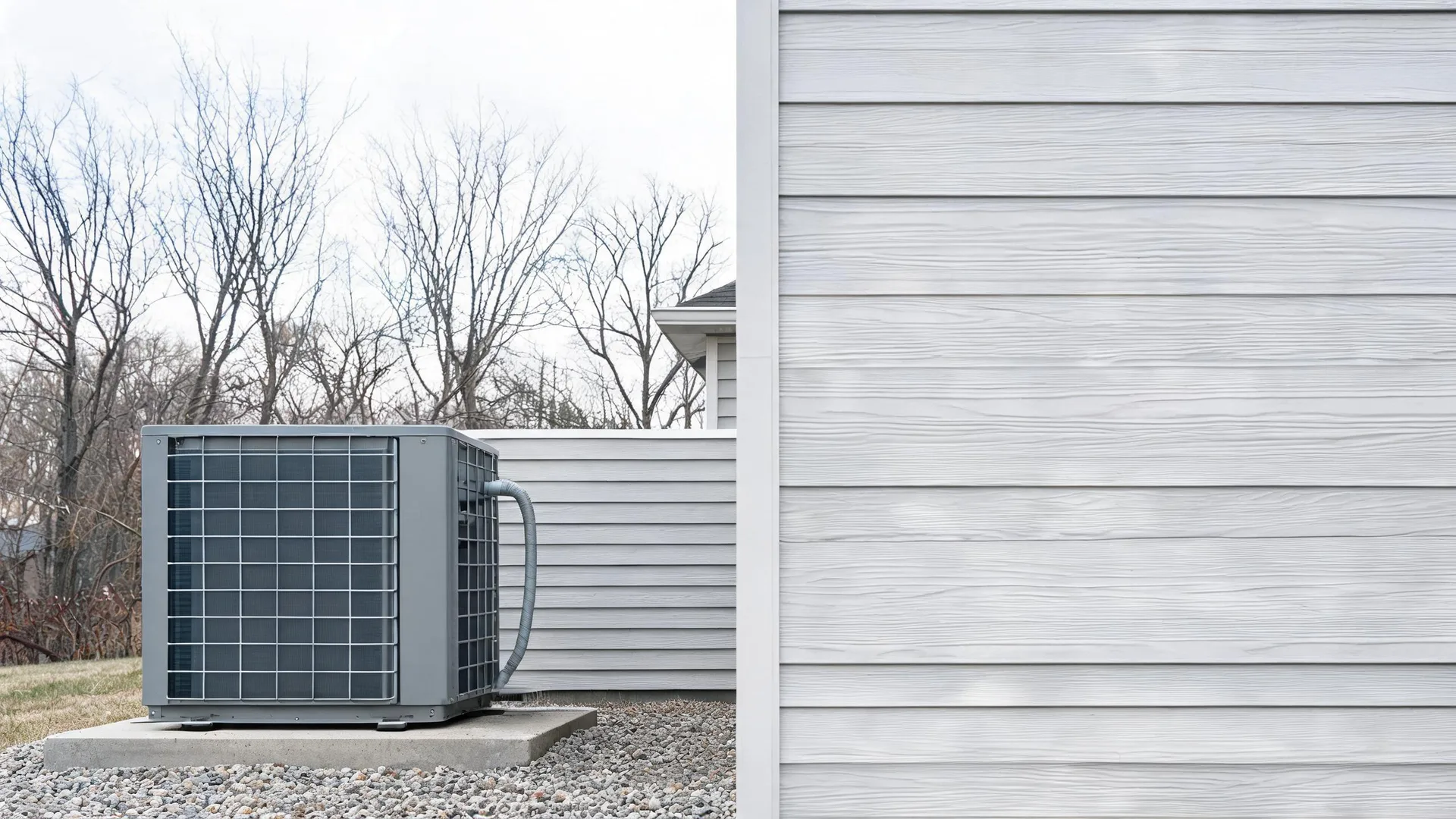
A gray outdoor HVAC unit mounted on a concrete pad beside a house with gray lap siding and a stone foundation.

It runs both directions, all year, with no break

A heat pump runs in both directions all year, so it never really gets a season off like a furnace does. That steady use wears on the same parts whether it's pushing heat in or pulling it out. The reversing valve is usually the first thing to show its age, since every switch between heating and cooling cycles it through a position change. If it sticks, the unit blows air that's not the right temperature for what you asked it to do. Short cycling adds up too. A unit that kicks on and off every few minutes rather than running a full cycle puts more wear on the compressor than one that runs long and steady. Ask how many hours a day yours has been running lately. If that number has crept up with no change in the weather, something is already making the system work harder to do the same job.

A small electrical fault can take out the compressor

A failing capacitor or contactor makes the compressor struggle to start. Each hard start heats the windings a little more than the last one did. Keep running it that way and the windings eventually burn out, and a compressor failure is a different repair than a part swap.

Ice on the outdoor coil doesn't melt itself

A heat pump defrosts by briefly reversing into cooling mode and running the outdoor fan to shed frost. If that defrost cycle isn't working, ice builds instead of clearing. Thicker ice blocks airflow across the coil, and the compressor keeps pulling against a system that can't move heat the way it's supposed to.

Most heat pump failures trace back to a handful of parts, not bad luck. The capacitor is usually first, since it's what kicks the compressor and fan motors into motion, and a weak one makes them strain to start. The reversing valve fails next most often, because it's the one part doing mechanical work every single cycle, switching the system between heat and cool. Low refrigerant is rarely a wear issue by itself. It means a leak somewhere in the lines or coil, and topping it off without finding the leak just buys a little time. The contactor is a smaller part but a common one, with contacts that pit and burn after enough cycles until they stop closing reliably. Any of these can look like the same symptom, a unit that runs but won't heat or cool right, so the part that's actually bad isn't always the one you'd guess.

A repair is worth doing when the part that failed is small and everything else in the system is sound. A capacitor, a contactor, a blower motor, these get replaced on their own and the unit runs like new after. The compressor is a different question. It's the most expensive part in the system, and when it fails, the reason it failed usually matters more than the failure itself. If something else was already wrong, bad airflow, a refrigerant leak, electrical trouble that went unfixed, a new compressor is just waiting for the same thing to kill it again. An old unit that's had one isolated failure is still worth fixing. An old unit that's failed again and again over a short stretch is telling you something, and the next repair is rarely the last one.