




Single-story buildings with pale siding and one brick section with a covered porch stand behind a trimmed hedge and lawn, under a large moss-draped oak branch.

Heat Pump Repair in Pascagoula, MS

Tell us about the job

Takes about a minute. No obligation.

RepairHeat PumpJackson County, MS
Step 1 of 2

What ZIP code is the job in?

Half the homes in Jackson County were built in 1984 or later. A heat pump that came with a house that age likely still has real years left in the compressor and the coils. That matters when something goes wrong with it. A newer system is usually worth repairing rather than replacing, since the rest of it still has life in it. Worth checking when your system actually went in, especially if the house itself is one of the newer ones on the block.

5 months
November through March, your system heats
7 months
April through October, it cools
42°F
the average winter night it heats against
90°F
the average summer afternoon it cools against
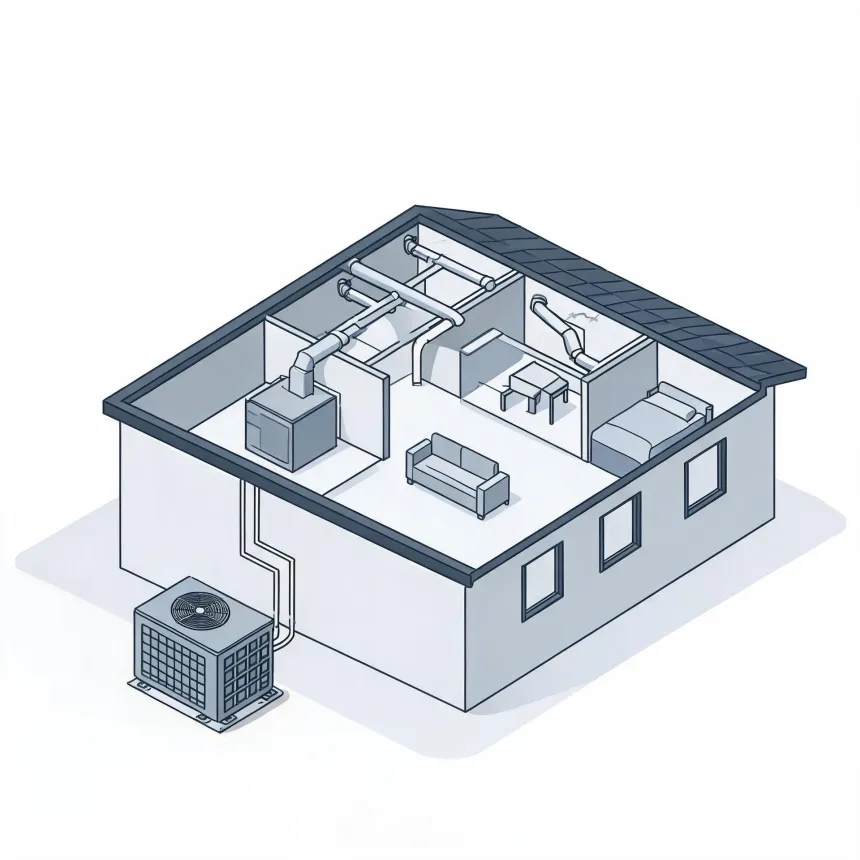
Isometric line illustration of a cutaway single-story house showing interior rooms with ducted air distribution, an indoor air handler, furniture, and an outdoor condenser unit connected by lines outside the wall.
Your system heats November through March and cools April through October.

NOAA nClimDiv, 1991–2020 normals

Your heat pump switches over to heat in November, five months before it has to cool anything again.

October is when a weak part finally gets found, right before the switch, not during it.

Pascagoula sees 82 severe weather events a decade. Hail and debris wear on the outdoor unit.

82 severe weather events from 2015 to 2024
30% of homes statewide lost power a day or more in 2024
29 damaging wind events from 2015 to 2024

A repair call usually settles this fast. A technician can tell you whether the part that failed is a one-off or a sign the unit is near the end. If your house is one of the newer ones in the county, that's a good reason to lean toward fixing it rather than replacing it. Ask when the system itself went in, not just the house. If it came with the house, there's a good chance it still has years left in it.

If the outdoor unit took a hit, get it checked before you rule out a repair

After a storm with hail or wind, a technician can check the coil and fan for damage even if the heat pump is still running. A unit that sounds fine can still be running on a bent fin or a cracked blade.

Find a contractor
A man in a cap, navy T-shirt and brown work pants walks up concrete steps toward a blue front door, carrying a worn canvas tool bag with a hammer inside, beside a potted shrub in a blue planter.
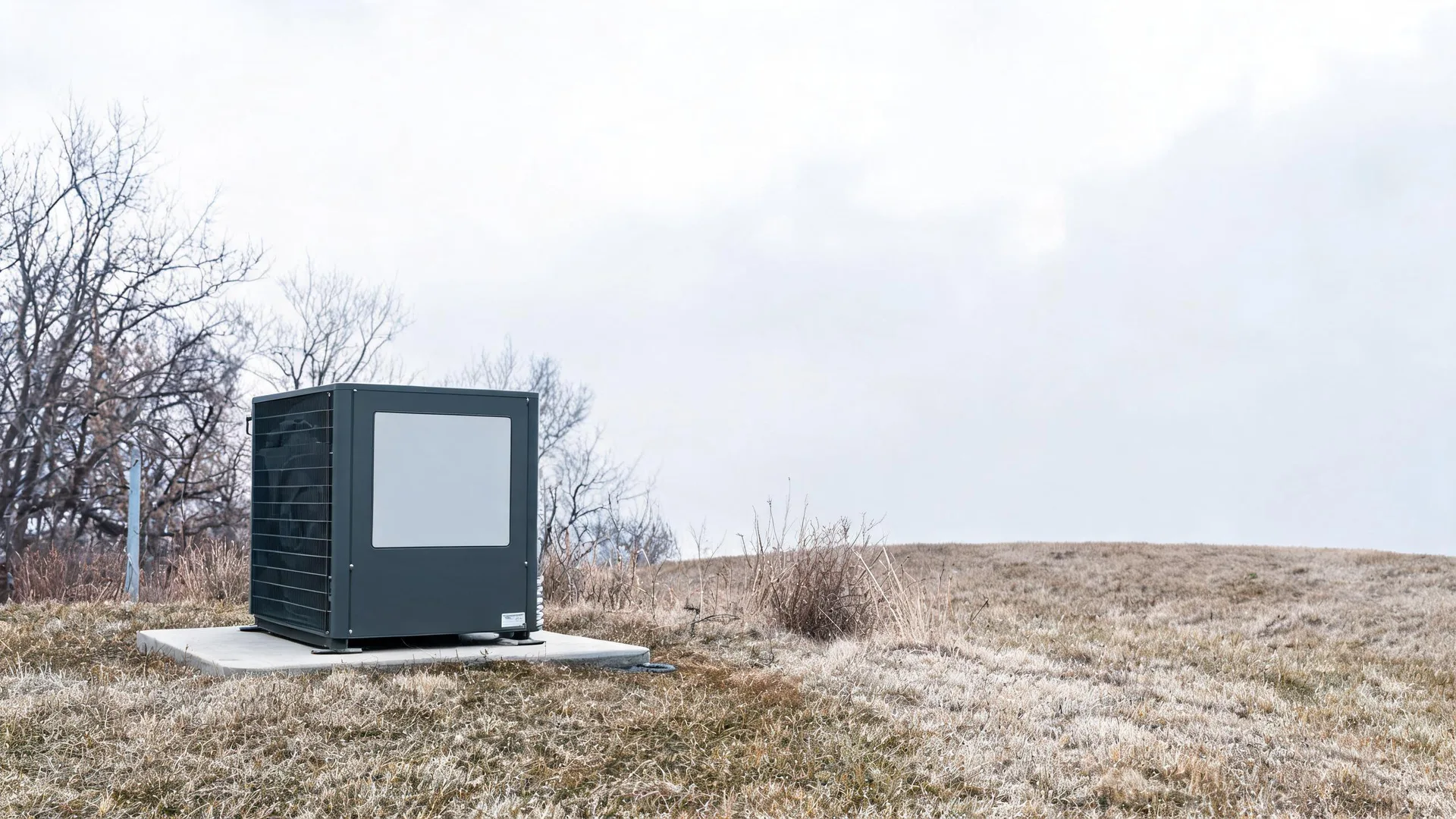
A dark gray heat pump unit mounted on a concrete pad next to a house with gray siding and a stone veneer wall.

Letting it keep running wears down the part underneath

A heat pump that's struggling doesn't fix itself by staying on. If the charge is low, the compressor works harder to move the same amount of heat, and it runs hotter than it was built to run. That wears it out faster. If a fan motor is failing, it can still spin, just slower or with a wobble, and the coil behind it doesn't get the airflow it needs, so the system strains to work around a problem that started small. A frozen coil left alone can turn into a cracked one. A weak starting capacitor draws more current on every startup, and labors harder to get the compressor moving each time, until the day it can't start it at all. None of this announces itself. The unit keeps running and the air keeps moving while the strain builds underneath it.

What you can check at the thermostat

Set it to heat and raise the temperature a few degrees above the room. The outdoor unit should kick on within a few minutes and you should feel warm air at the registers, not cool or barely moving air. If the system runs but the air feels cold, that points to the reversing valve or the refrigerant charge, not something you can fix from inside.
What you can check at the unit itself

Look at the outdoor unit. Clear away leaves, grass clippings or anything stacked against it, since blocked airflow across the coil makes the whole system work harder. Check the coil for a heavy layer of ice. A little frost in cold weather is normal, but a solid block of ice usually means the defrost cycle isn't working or airflow is already restricted.

A heat pump usually tells you something's wrong before it quits outright. Short cycling is one of the first signs, the unit turning on and off every few minutes instead of running a steady stretch. Ice on the outdoor coil that doesn't clear during the day is another, especially paired with weak heat at the registers. Listen for it too. A low hum with no fan movement points to a seized motor or failed capacitor. A hard clank at startup usually means the compressor is struggling to get going. Odd smells from the vents, especially anything electrical, mean it's time to shut the system off and get someone out rather than wait and see.

Repair makes sense right up until the compressor itself fails. That's the part that moves refrigerant through the whole system, and it's also the most expensive part in the unit by a wide margin. A failed capacitor, a bad contactor, a leaking valve, those get fixed and the heat pump runs like normal afterward. A dead compressor is a different conversation, because replacing just that part can cost close to what a new outdoor unit costs, and a tech will usually tell you straight that it's not worth doing. Everything else on a heat pump, the fan motor, the reversing valve, the board, is worth fixing almost every time. It's really only the compressor where the math changes.