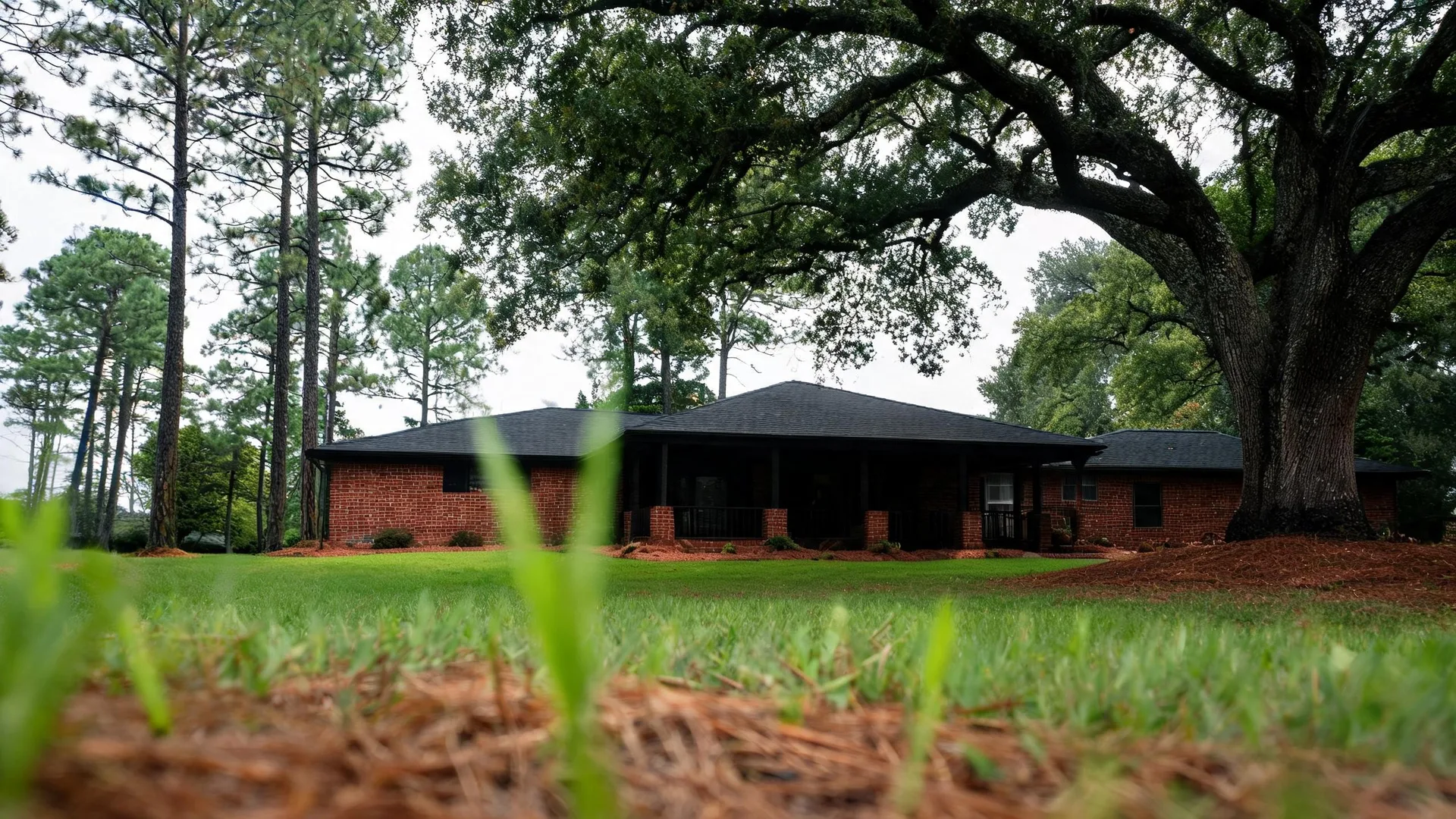
A single-story brick house with a dark hipped roof and covered porch, seen from a low angle across a lawn with blurred grass in the foreground, framed by pine trees and a large spreading oak on the right.

Heat Pump Repair in Magee, MS

Tell us about the job

Takes about a minute. No obligation.

RepairHeat PumpSimpson County, MS
Step 1 of 2

What ZIP code is the job in?

Warm air in the dead of winter

A heat pump in heating mode shouldn't blow air that feels cool to the hand even though it's warmer than the room. That's normal for the equipment, but if the air feels truly cold, or the system runs and runs without the house warming up, something's keeping it from pulling heat out of the outdoor air. Could be the reversing valve stuck in the wrong position, a refrigerant leak, or a compressor on its way out.


Ice that won't clear on its own

Heat pumps frost up outside in cold weather, then run a defrost cycle to melt it off before going back to heating. That's expected. What's not expected is frost or solid ice that stays on the outdoor unit for hours, or builds up thick around the coil and fan. That points to a defrost control board that isn't triggering the cycle, or a fan motor that's stopped turning, and it needs a tech before the coil takes real damage.

5 months
November through March, your system heats
6 months
May through October, it cools
38°F
the average winter night it heats against
91°F
the average summer afternoon it cools against
Isometric line illustration of a cutaway single-story house showing interior rooms with furniture and ceiling ductwork, connected to an outdoor condenser unit on the ground outside the left wall.
Your system heats November through March and cools May through October.

NOAA nClimDiv, 1991–2020 normals

Half the homes in Simpson County were built in 1986 or earlier.

But a heat pump's own age tells you more about what's wrong with it than the house it sits beside.

November is when a weak heat pump finally gets found out

Cooling runs May through October
Heat runs November through March
Power costs 13.39 cents a kWh statewide

The repair or replace question usually comes down to what's failing and how often. A single bad capacitor or a stuck contactor is a straightforward fix on a unit of any age, and worth doing. It's a different story when the compressor itself is weak or the coil has already been patched for a leak once before. Those point to a system that's wearing out rather than one that hit a bad patch, and another repair tends to follow not long after the first. A tech can tell you which case you're in by checking the compressor and coil directly, not just clearing the fault and calling it done. Worth asking, too, whether the parts needed are still easy to get, since older refrigerant and older boards can be harder to source than the repair itself suggests.

Get the usual fix

Nothing about this area is especially hard on it. It's most likely the usual problem with the usual fix.

Find a contractor
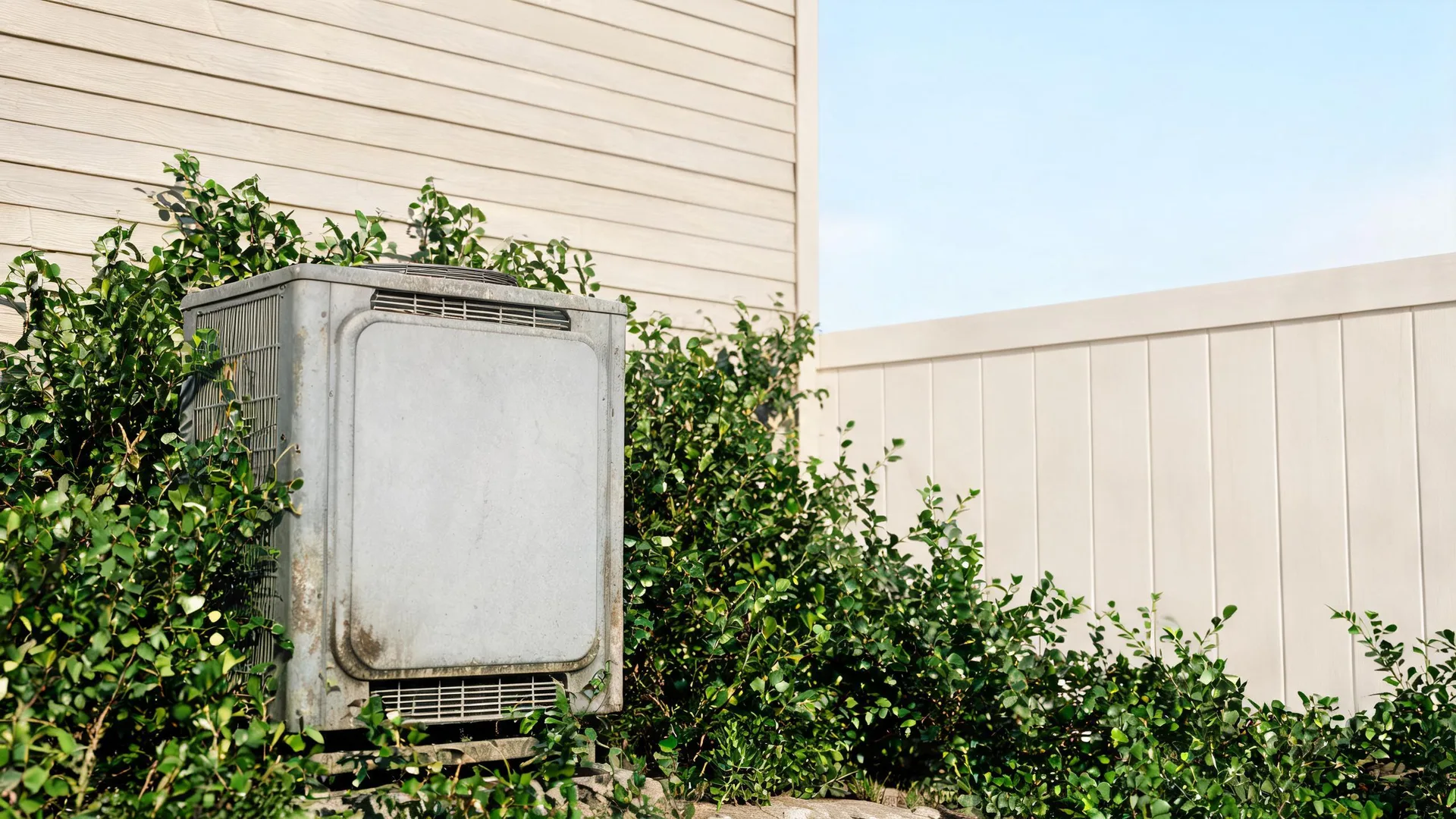
A residential heat pump outdoor unit mounted on a concrete pad next to a house with gray vinyl siding.

It never gets the season off

A heat pump runs in both directions, heating and cooling, so the parts that fail are the ones that never get a break. The compressor is usually at the center of it, since it's working on the hottest days and the coldest ones alike. Low refrigerant from a slow leak makes it work harder to move the same amount of heat, and that wears it out before its time. A weak capacitor won't get the compressor or fan motor started reliably, and every rough start adds more strain. The reversing valve shifts the system between heating and cooling, and after enough cycles it can stick, leaving the system stuck in one mode no matter what the thermostat asks for. Outside, the coil and fan sit exposed to rain, pollen and yard debris, so a worn fan motor bearing or a coil caked with buildup tends to show up as the system running long without keeping up. None of this comes from one bad stretch of weather. It's the ordinary wear of a machine that doesn't get a season off.

What you can check first

Check the thermostat is set to heat, not auto, and the setpoint is actually above room temperature. Look at the outdoor unit for anything blocking airflow, like leaves or a cover left on, and clear it away. Go to the breaker panel and confirm the indoor and outdoor breakers are both on. Check the filter, because one packed with dust chokes airflow across the indoor coil and can make the system run long without heating well.

What to leave alone

Don't take a panel off the outdoor unit or touch anything inside the cabinet. Don't pour water on ice to melt it, since the coil and fan blades underneath aren't built for that and the ice will likely come back on its own anyway. If the system is tripping the breaker repeatedly, stop resetting it and leave it off, since that usually means something is actually shorting out rather than a one-time fluke.

A heat pump that's struggling will keep trying anyway, and that's the problem. If the compressor is low on charge, running it longer just means more hours spent pulling against a problem it can't fix on its own, and the wear adds up faster than the heat it puts out. A reversing valve that's starting to stick can seize in one position entirely if it keeps getting cycled while it's already failing. Ice left to build on the outdoor coil blocks airflow across it, so the system pulls even less heat from the air and the next defrost cycle has that much more to melt. A fan motor with a going-bad bearing will run hot and loud right up until it seizes, usually without much warning first. None of these get better by waiting them out. They get worse, and sometimes they take a second part down with them.

A diagnostic visit starts outside at the unit, not inside at the thermostat. A tech checks the refrigerant charge and the pressures on both the high and low side, since a lot of heating complaints trace back to a slow leak rather than a broken part. From there it's the reversing valve, checked by feel and by temperature on the lines running to it, to see whether it's actually shifting when it's told to. The capacitor gets tested under load, not just looked at, because a capacitor can look fine and still be too weak to start the compressor reliably. The defrost control board and sensor get checked too, since a board that won't call for defrost looks exactly like a frozen coil with no obvious cause. None of this is guesswork. It's a sequence, each check ruling something in or out until the actual failure is the only thing left.