Two illuminated white colonial-style houses with wrap-around porches, flanked by oak trees draped in Spanish moss, photographed at night.

Heat Pump Repair in Indianola, MS

Tell us about the job

Takes about a minute. No obligation.

RepairHeat PumpSunflower County, MS
Step 1 of 2

What ZIP code is the job in?

May and November are when trouble shows up

A heat pump in Indianola switches over to cooling in May and back to heat in November. The first stretch of hard running after the switch is when a weak part gets found out, because the unit was limping along in milder weather and now has to carry a full load.


April and October are when to get it checked

If a heat pump is going to struggle this year, April or October is when to catch it, right before the load goes up. Waiting until the system is already carrying the season means doing without cooling or heat while the repair gets scheduled.

5 months
November through March, your system heats
5 months
May through September, it cools
37°F
the average winter night it heats against
91°F
the average summer afternoon it cools against
Isometric illustration of a cutaway house showing interior rooms, ceiling ductwork and an air handler, connected by lines to an outdoor condenser unit on a pad beside the building.
Your system heats November through March and cools May through September.

NOAA nClimDiv, 1991–2020 normals

A low refrigerant charge makes the compressor run hotter, and running it that way keeps wearing it down.

The compressor is what moves heat in and out of a heat pump, so a failing one is worth catching before it stops.

Age isn't what decides thisHalf the homes in Sunflower County were built in 1977 or earlier, half in 1977 or later. Either way, the usual wear shows up the same way.

Sunflower County has had 74 severe weather events over the past ten years, most of it wind, with hail and a few tornadoes mixed in. That's not out of the ordinary for this part of Mississippi, and it's not what tends to break a heat pump. The more common culprit is simpler. A unit that's been running fine in mild weather suddenly gets asked to carry a full load, and whatever was already weak gives out. If the power does go out, the heat pump will start back up on its own once it's restored, no need to reset anything. What's worth checking is the system itself, not the storms around it.

Get it looked at early

Problems tend to show up in the first weeks of the season, when the load hits a part that was already weak.

Find a contractor
A man in a cap, dark long-sleeved shirt and brown work pants carries a canvas tool bag up porch steps toward a blue front door, with a shrub in a blue planter beside it.
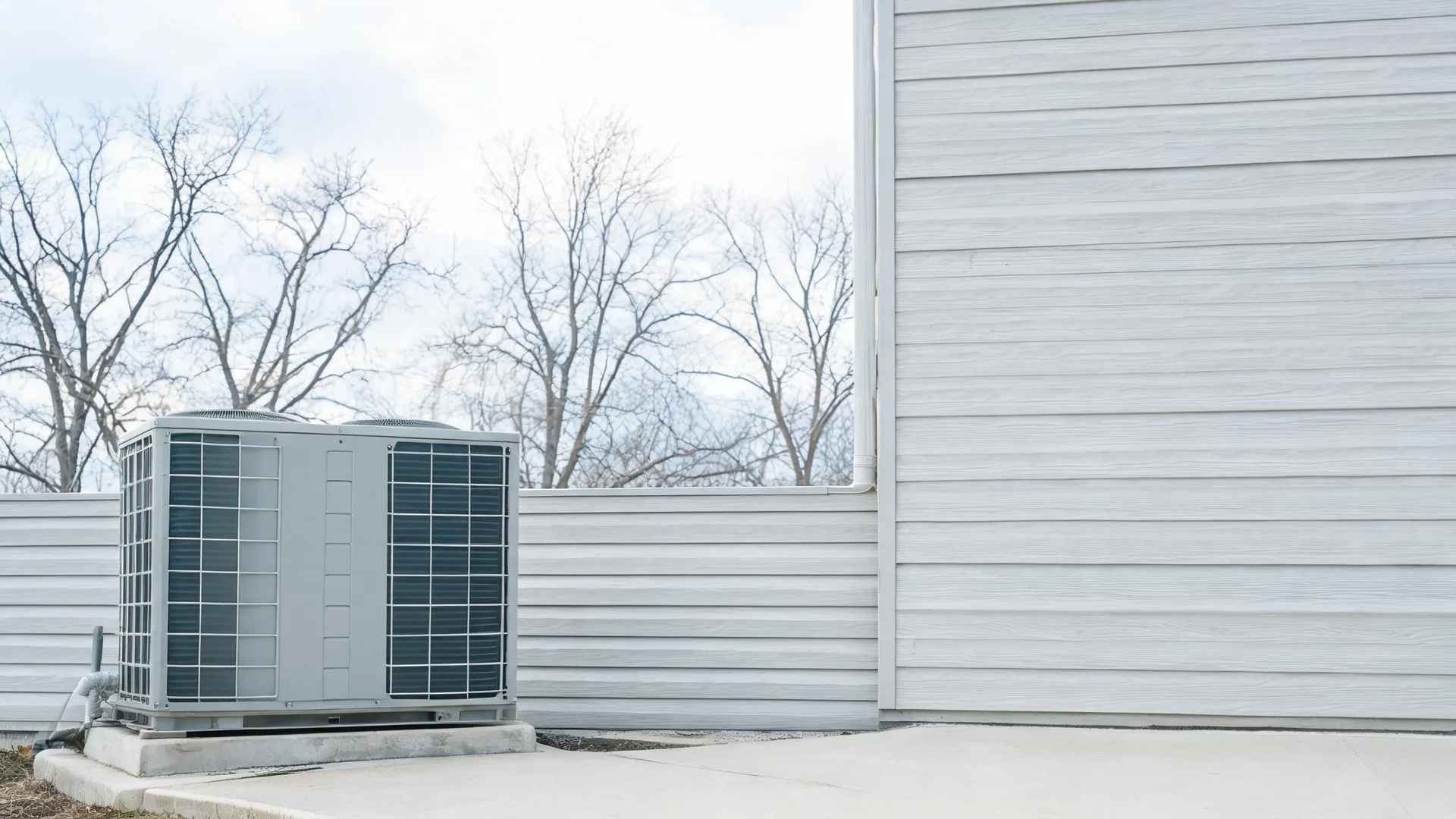
A white mini-split heat pump outdoor unit mounted on a concrete pad beside a gray-sided house, surrounded by gravel and green shrubs.

What a failing heat pump sounds and feels like

A heat pump that is on its way out gives signs before it quits. It runs longer than it used to without getting the house to the temperature on the thermostat. Air out of the vents feels wrong, not quite warm in heat mode, not quite cold in cooling mode. It short cycles, kicking on and off every few minutes instead of running a steady stretch. Frost builds up on the outdoor unit and stays past the point where the defrost cycle should have cleared it. The outdoor fan or compressor starts making a grinding or rattling noise it didn't make before. Any one of these is worth a call. Together, they usually mean a part is already failing, not just strained.

What the thermostat and breaker rule out

Check the thermostat is set to the right mode and the temperature actually calls for heat or cooling, not sitting right where it already is. Look at the breakers for the air handler and the outdoor unit. If one is tripped, reset it once. If it trips again, stop and leave it for a tech, because that's a short somewhere, not a fluke.

What's worth looking at outside

Walk out to the outdoor unit and see if it's running at all, fan turning, air moving off the top. Clear away leaves, grass clippings or anything stacked against the sides, since the unit needs open air around it to move heat. Frost or ice built up on the coil is worth noting but not worth chipping off yourself. Check the indoor filter too, since a clogged one starves the system from the inside the same way a blocked coil does from the outside.

A diagnostic visit starts outside, with the tech checking refrigerant pressure and the temperature split between the air going into the unit and the air coming out. That split tells them whether the system is actually moving heat the way it should. They'll check the capacitor and contactor in the outdoor unit, since those are what get the compressor and fan running in the first place. Inside, they'll look at the air handler, the filter, and the coil for frost or buildup. If the unit is short cycling or running long without catching up to the thermostat, they're tracing that back to whichever part is causing it, not just resetting the system and hoping. By the end, you should know what's failing, why, and what happens if it's left alone.