Washington County takes a beating
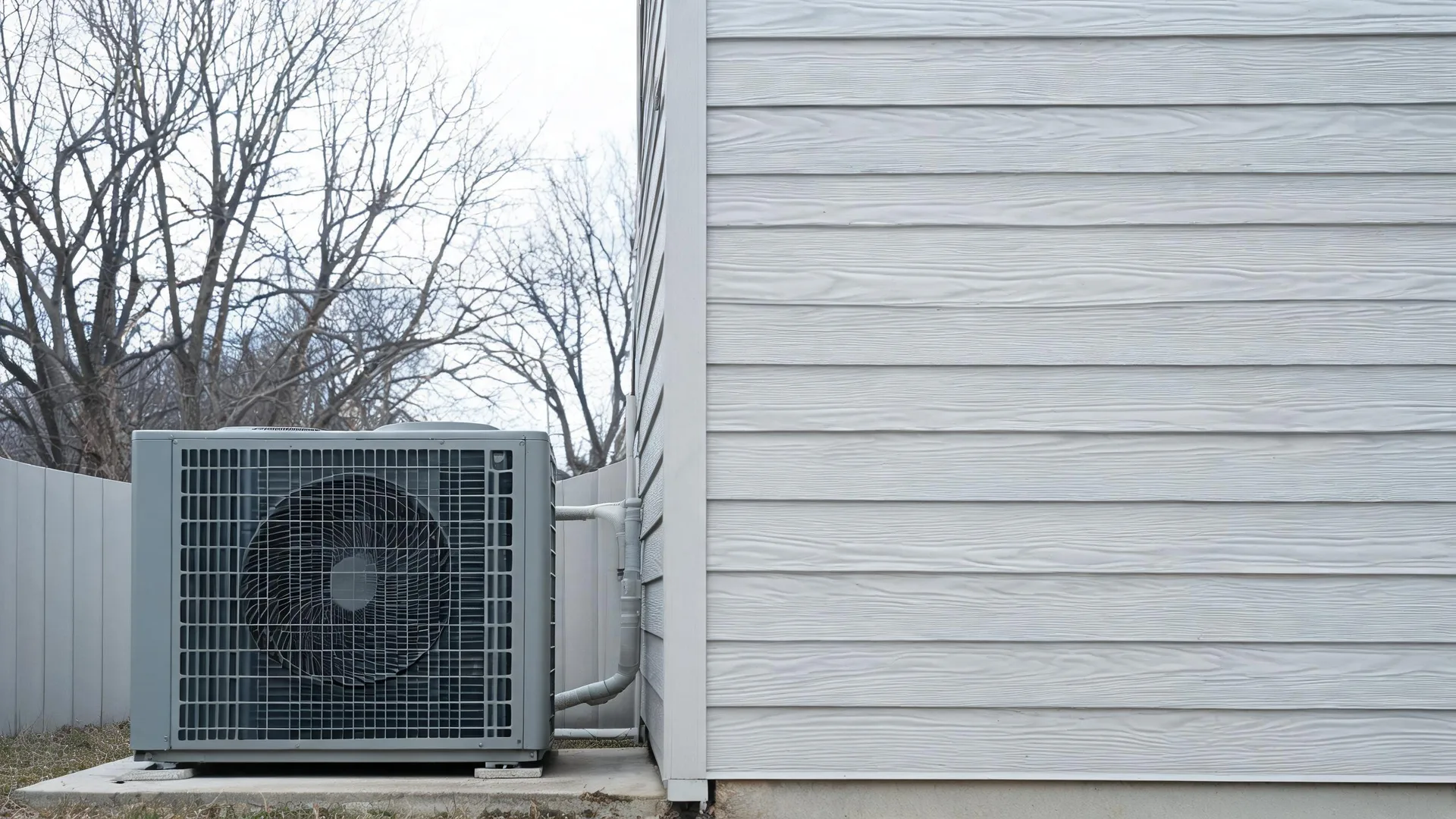
Washington County saw 115 severe weather events between 2015 and 2024, most of it damaging wind and hail. Tornadoes touched down here too. A heat pump's outdoor unit sits through all of it with no wall around it.

Takes about a minute. No obligation.
Washington County saw 115 severe weather events between 2015 and 2024, most of it damaging wind and hail. Tornadoes touched down here too. A heat pump's outdoor unit sits through all of it with no wall around it.
Hail dents fins and bends the cabinet. Wind-blown debris can nick the coil or jam the fan blade. A heat pump can keep running after damage like this, just worse and for longer than it should. If your outdoor unit took a hit this year, it's worth having someone look at it even if the air coming out still feels right.

NOAA nClimDiv, 1991–2020 normals
Your heat pump switches over to heat in November, right after a Mississippi hurricane season that often leaves outdoor units dented or packed with debris.
October is the month to find that out, before the first cold morning asks the unit to work.



A reversing valve stuck in one position is one of the more common failures, and it shows up as a heat pump that blows cold air when it should be heating, or won't switch over at all. The defrost board is another weak point. It tells the unit when to melt ice off the outdoor coil, and when it fails the coil can ice over solid and choke off airflow. A low refrigerant charge, usually from a slow leak at a fitting or coil, makes the system run long and still fall short of the set temperature. Capacitors wear out from heat cycling and leave the outdoor fan or compressor struggling to start, sometimes humming without turning over at all. None of these announce themselves clearly from inside the house. They just show up as a unit that runs more, heats less, or trips off on its own.
If the heat pump outside is original to the house, that's worth mentioning before a repair gets scheduled. A contractor can check what's failing and how much life the unit has left in the same visit.
Find a contractorA low charge doesn't stay put. The compressor keeps pulling on refrigerant that isn't there, runs hotter than it should, and that heat breaks down the oil that's supposed to protect it. Leave a reversing valve stuck long enough and the compressor is cycling against pressures it wasn't built to handle. Ice on the outdoor coil gets worse the longer it sits, since airflow drops, the system draws harder to compensate, and that strain lands on the same compressor. None of this fixes itself by running longer. It just moves the failure further into the one part that keeps the whole system running.
Look at the thermostat first. Make sure it's set to heat and the set point is actually above room temperature, since a setting bumped by accident is the most common false alarm there is. Check the outdoor unit for ice, leaves or debris packed against the fins. Check that the indoor filter isn't clogged, since restricted airflow can make a heat pump seem like it's failing when it's just starving for air. Check any breaker or disconnect near the outdoor unit hasn't tripped.
Don't pull panels off the outdoor unit or reach into the cabinet. The capacitors in there hold a charge even with power off. Don't try to chip ice off the coil by hand, since that bends fins and does more damage than the ice itself. If the fan isn't turning or the unit is humming without starting, don't keep flipping the breaker to see if it catches. That's a sign something electrical needs a tech, not another try.
What tips a homeowner off is usually sound or feel, not a number on a thermostat. Air coming from the vents that feels cool or lukewarm when the system is set to heat is one of the clearest signs, especially if it used to feel warmer. A unit that short cycles, running for a few minutes then shutting off and starting again, is working against something it shouldn't be. So is one that runs and runs without the house ever reaching the set point. Listen outside too. Grinding, buzzing, or a hard clicking when the compressor tries to start all point to a part giving out rather than normal operation. Ice on the outdoor coil that doesn't melt off on its own during the defrost cycle is worth a look as well. Any of these on its own is reason enough to have someone check it before it's the only heat the house has on a cold night.
A diagnostic visit starts outside, at the unit itself. A tech checks refrigerant pressures on the gauges, since that number tells them more about a low charge or a failing valve than anything heard from inside. They'll test the capacitors with a meter rather than guess from a hum, because a capacitor can look fine and still be weak enough to strand the compressor on startup. The reversing valve gets checked by hand, feeling whether it's actually shifting when it's told to. Electrical connections get checked too, since a loose or corroded wire can mimic a bad part and send someone chasing the wrong fix. Airflow gets checked last, filter, ductwork, the coil itself, because restricted air can make a healthy system act like a broken one. The goal is finding which part is actually failing, not just which symptom showed up first.