





A white Southern-style house with a wraparound porch photographed at night, surrounded by Spanish moss-draped oak trees lit by landscape lights.

Heat Pump Repair in Crystal Springs, MS

Tell us about the job

Takes about a minute. No obligation.

RepairHeat PumpCopiah County, MS
Step 1 of 2

What ZIP code is the job in?

Before you call anyone, check the thermostat is actually set to heat and the setpoint is above room temperature. Go outside and look at the outdoor unit. If it's caked in ice or snow, that can be normal during a defrost cycle, but ice that never clears points to a real problem. Check that the outdoor fan is spinning. If the unit is running but the fan sits still, shut it off at the breaker and wait for a tech rather than letting it run that way. Inside, pull the air filter and hold it up to a light. If you can't see through it, swap it or clean it, since a clogged filter can choke airflow enough to look like a failing system. Walk around the house and check that supply vents are open and not blocked by furniture or rugs. If you've done all this and it still isn't heating, that's worth a call.

5 months
November through March, your system heats
6 months
May through October, it cools
39°F
the average winter night it heats against
91°F
the average summer afternoon it cools against
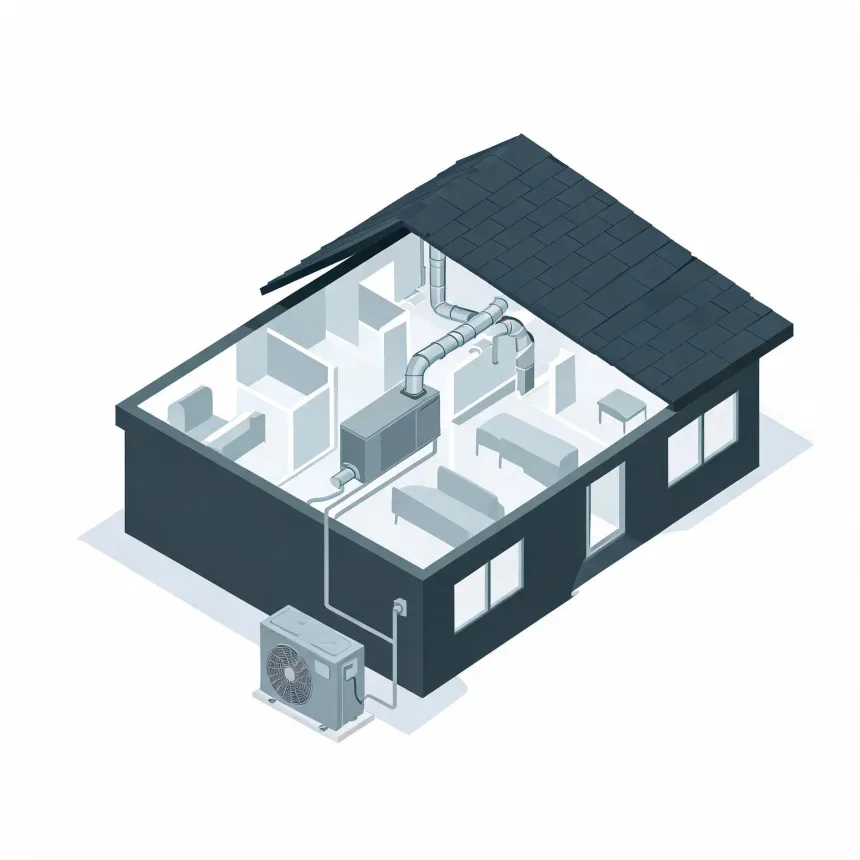
Isometric cutaway illustration of a single-story house showing interior rooms, ceiling ductwork connected to an air handler, and an outdoor condenser unit linked by a line set.
Your system heats November through March and cools May through October.

NOAA nClimDiv, 1991–2020 normals

Heat here switches over to heat pump duty in November.

October is when a weak part gets found, before the first cold snap puts load on it.

Half the homes here were built by 1985, and age isn't what's wrong with your heat pump

Half the homes here were built by 1985
142 damaging wind events from 2015 to 2024
Power costs 13.39 cents a kWh statewide

Copiah County logged 142 damaging wind events between 2015 and 2024. That's better than one a year, and your heat pump sits outside through every one of them. Wind-driven debris nicks the coil fins or dents the cabinet. Power drops out and comes back hard, and the compressor takes that surge each time. None of it shows up right away. It shows up months later as a system that short cycles, or runs long and still doesn't keep up. Get the actual cause found rather than just topping off refrigerant or resetting the breaker, because a repair that skips the real problem won't hold.

Get it looked at early

Problems tend to show up in the first weeks of the season, when the load hits a part that was already weak.

Find a contractor
A man in a dark jacket, cap and tan work pants climbs steps toward a blue front door, carrying a canvas tool bag with tools in its side pockets, beside a shrub in a blue planter.
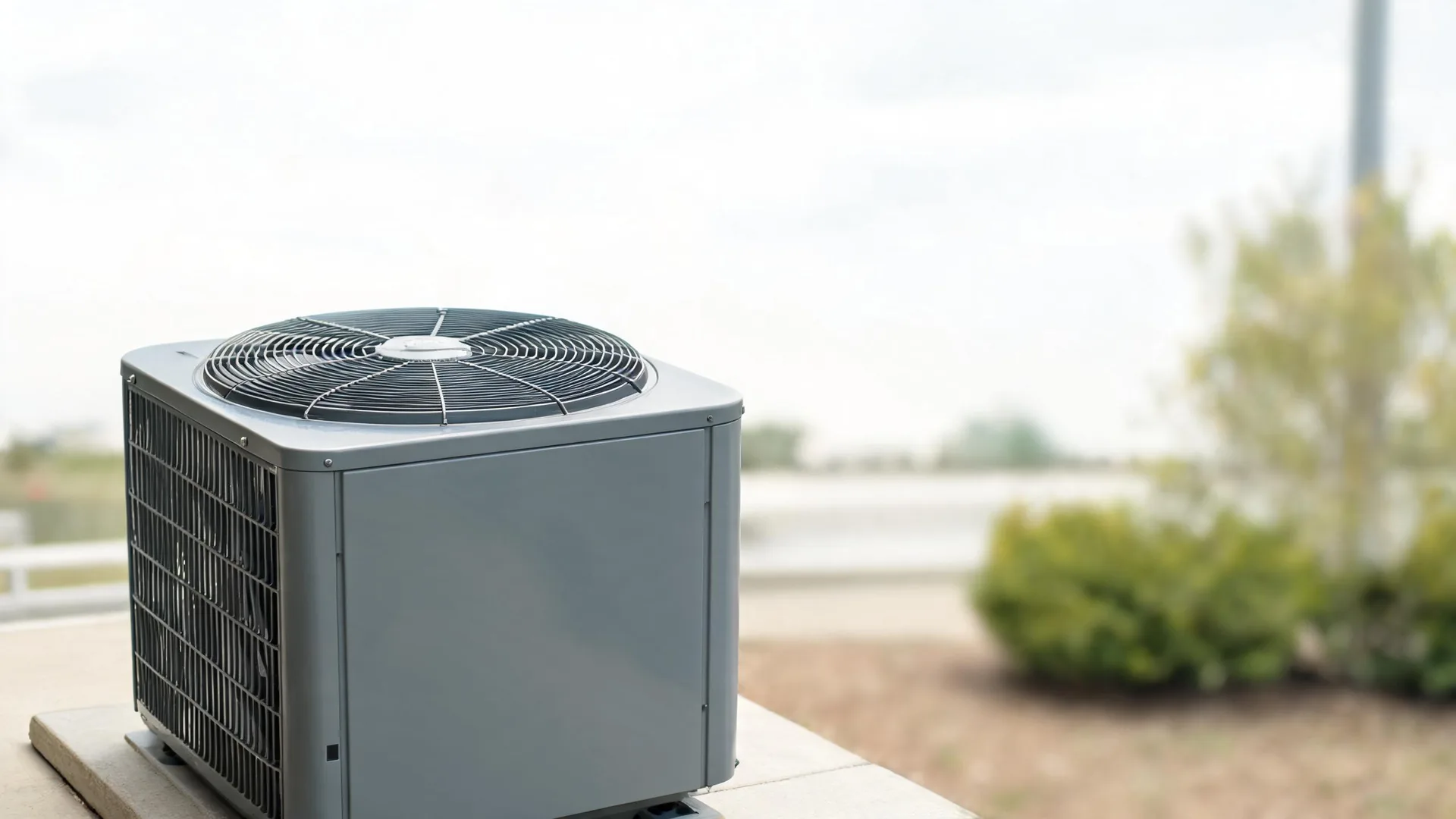
A gray heat pump condenser unit mounted on a concrete pad against the gray lap-siding exterior wall of a house.

What to ask for when you call

If your heat pump has been through a few years of outages and wind, say so when you call. Ask the tech to check the coil fins, the cabinet, and the compressor rather than just topping off refrigerant or resetting the breaker. Those are the parts that take the damage, and a tech who knows to look there finds the real problem instead of masking it for a few weeks.

Heating that runs but doesn't keep up

A heat pump that runs constantly and still leaves the house cold is often low on refrigerant or losing heat at the outdoor coil. The compressor stays on the whole time trying to close the gap. That's different from a system that won't start at all, and it usually points to a charge check or a coil problem rather than a wiring fault.
Short cycling or strange noises

A heat pump that kicks on and off every few minutes is short cycling, and it wears on the compressor each time it happens. A clank or shudder at startup usually means a part inside the outdoor unit has worked loose or is failing. Neither one tends to settle down on its own, and both are worth checking before the system has to run through a stretch of real cold.

A lot of heat pump failures trace back to the reversing valve, the part that switches the system between heating and cooling. When it sticks, the unit runs but blows the wrong temperature air, or gets stuck defrosting and never comes back to heating properly. The other common failure is the run capacitor, which gives the compressor and fan motor the jolt they need to start. A weak capacitor lets the compressor try to start without quite making it, and that struggle is what burns the compressor out early. Refrigerant leaks are the other big one, usually at a fitting or coil joint, and a system low on charge will run long and still underheat the house. None of these announce themselves clearly. They show up as a system that runs but doesn't perform, which is why the symptom alone doesn't tell you which part failed.

Age isn't the question that decides repair or replacement. What matters is which part failed and what else is close behind it. A reversing valve or capacitor is a contained fix. Swap the part, the system goes back to running the way it did. A compressor is a different matter, since it's the most expensive part in the unit and failing compressors often take a toll on other parts on the way down. The other thing to weigh is pattern. A system that's needed a few different repairs over a couple years is telling you something a single breakdown doesn't. One bad part is a repair. A string of unrelated ones is a system wearing out across the board, and at that point you're paying to patch one spot while the next one is already weakening.