Three white clapboard houses with wraparound porches glow with warm interior and landscape lighting beneath Spanish moss-draped oak trees at dusk.

Heat Pump Repair in Columbia, MS

Tell us about the job

Takes about a minute. No obligation.

RepairHeat PumpMarion County, MS
Step 1 of 2

What ZIP code is the job in?

Check the simple stuff first

Look at the thermostat setting and make sure it's calling for heat or cool the way you expect. Check the breaker for the outdoor unit and the indoor air handler, since a tripped breaker on either side can shut the whole system down. Pull the air filter and hold it up to a light. If you can't see through it, swap it before you do anything else, because restricted airflow can mimic a much bigger problem.


What to leave alone

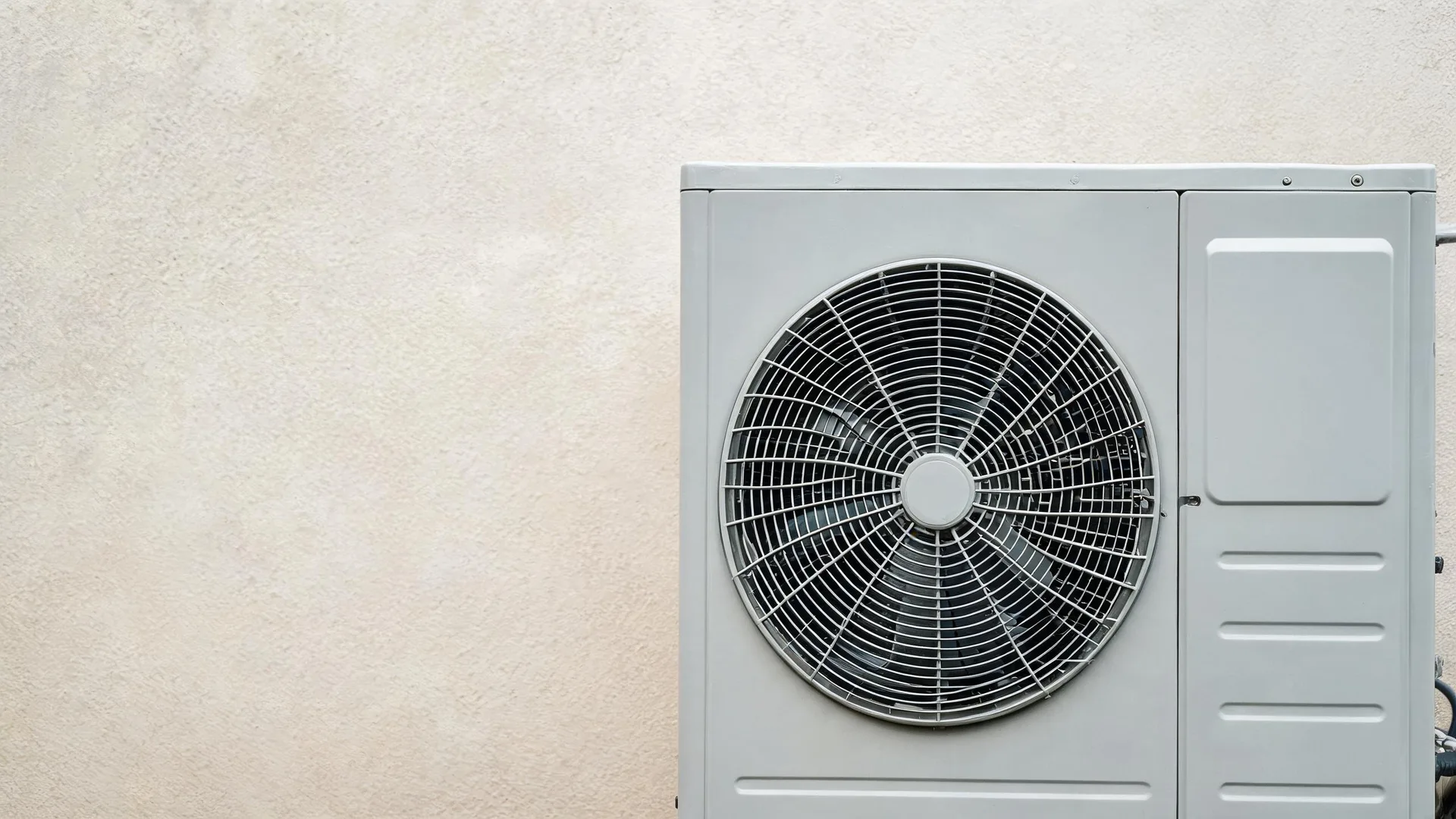
Don't open the outdoor unit's cabinet or touch the wiring inside it. Don't pour water or anything else on a frozen coil to melt it faster, just switch the system off and let it thaw on its own. If the unit is making a grinding or screeching noise, or tripping the breaker right after you reset it, turn it off and leave it off until a tech looks at it.

5 months
November through March, your system heats
6 months
May through October, it cools
40°F
the average winter night it heats against
91°F
the average summer afternoon it cools against
Isometric grayscale illustration of a cutaway two-story house showing interior ductwork, an indoor air handler unit, and an outdoor condenser unit on a pad beside the building.
Your system heats November through March and cools May through October.

NOAA nClimDiv, 1991–2020 normals

Marion County's housing is a mix, half built before 1980 and newer homes alongside them, with mobile homes making up close to a quarter of the stock.

A heat pump acting up here is almost always the ordinary kind of problem, whatever the age or type of the home it's in.

Heat pump problems here tend to show up right as November turns the system over to heat

Cooling runs May through October
Heat runs November through March
Power costs 13.39 cents a kWh statewide

A tech starts outside at the unit, checking the reversing valve and the refrigerant charge before anything gets taken apart. Low charge shows up as weak heat or weak cooling, and it's usually a leak somewhere in the line, not a part that just wore out. From there it's the defrost board and sensor, since a bad sensor can leave frost built up on the outdoor coil without the system ever kicking into defrost to clear it. Indoors, the tech checks the air handler, the blower motor, and the capacitor that starts it, because a weak capacitor makes the blower struggle or not start at all. Electrical connections get checked too, since loose wiring at the contactor causes the same short-cycling that a bad part would. Most of this gets sorted without pulling the unit apart, just gauges, a meter, and knowing which part fails the way yours is failing.

Get the usual fix

Nothing about this area is especially hard on it. It's most likely the usual problem with the usual fix.

Find a contractor
A man in a navy T-shirt, tan work pants, boots and a green cap climbs porch steps toward a blue front door, carrying a canvas tool bag beside a blue planter with a small shrub.

What you'll notice first

The air coming from the vents feels wrong before anything else does. In heat mode it blows cool instead of warm, or the system runs a long time without the room ever getting comfortable. In cool mode the outdoor unit might cycle on and off faster than normal, or ice builds up on the outdoor coil. A burning or musty smell from the vents, or a hissing or clanking sound from the outdoor unit, is also worth paying attention to.

Why it's worth a tech, not a guess

Weak heat and a frozen coil can both trace back to low refrigerant, a bad defrost sensor, or a failing defrost board, and only pressure gauges and a meter sort out which one it is. A heat pump that's short cycling or tripping its breaker should be left off until someone checks it, since running it longer can turn a simple repair into a bigger one.

A frozen coil is the clearest example. Ice forms because warm refrigerant isn't moving through the coil the way it should, and once ice builds up it blocks the airflow that would help the coil recover on its own. Left running, the system keeps pulling in moist air and the ice keeps thickening, sometimes to the point it blocks the fan blade or cracks a line. Weak heat works the same way from the other direction. If the reversing valve is only partly shifting or the charge is low, the compressor still runs and still draws power, it just isn't moving enough heat to keep up, so it runs longer and harder for less result. A compressor that short cycles on a failing capacitor or a loose connection wears its starts down fast, and each hard start is harder on it than the last. None of these fix themselves by giving the system more time.