





A lit antebellum-style two-story house with white columns and a wraparound porch at night, framed by live oak trees draped in Spanish moss.

Heat Pump Repair in Cleveland, MS

Tell us about the job

Takes about a minute. No obligation.

RepairHeat PumpBolivar County, MS
Step 1 of 2

What ZIP code is the job in?

Half the homes around Cleveland were built in 1977 or earlier, and half in 1977 or later. That split doesn't point to anything unusual for a heat pump. These systems run into the same handful of problems everywhere. A failing capacitor. Low refrigerant. A reversing valve that sticks. A dirty outdoor coil. When yours stalls out or stops keeping up, the cause is almost always one of those, not something particular to this house or this county. A contractor checking it out will start there first, because that's where the problem usually is.

5 months
November through March, your system heats
5 months
May through September, it cools
36°F
the average winter night it heats against
90°F
the average summer afternoon it cools against
Isometric grayscale illustration of a cutaway house showing interior rooms, ducted air handler and duct runs, connected by pipes to an outdoor condenser unit beside the building.
Your system heats November through March and cools May through September.

NOAA nClimDiv, 1991–2020 normals

A stuck reversing valve will leave you stuck in one mode, heat or cool, with no way to switch.

If your heat pump won't shift out of cooling now that it's cold, that valve is the first thing to check.

Bolivar County sees more than its share of hail and wind, and the outdoor unit sits right in it

115 severe weather events from 2015 to 2024
30% of homes statewide lost power a day or more in 2024
75 damaging wind events from 2015 to 2024

Get the usual fix

Nothing about this area is especially hard on it. It's most likely the usual problem with the usual fix.

Find a contractor
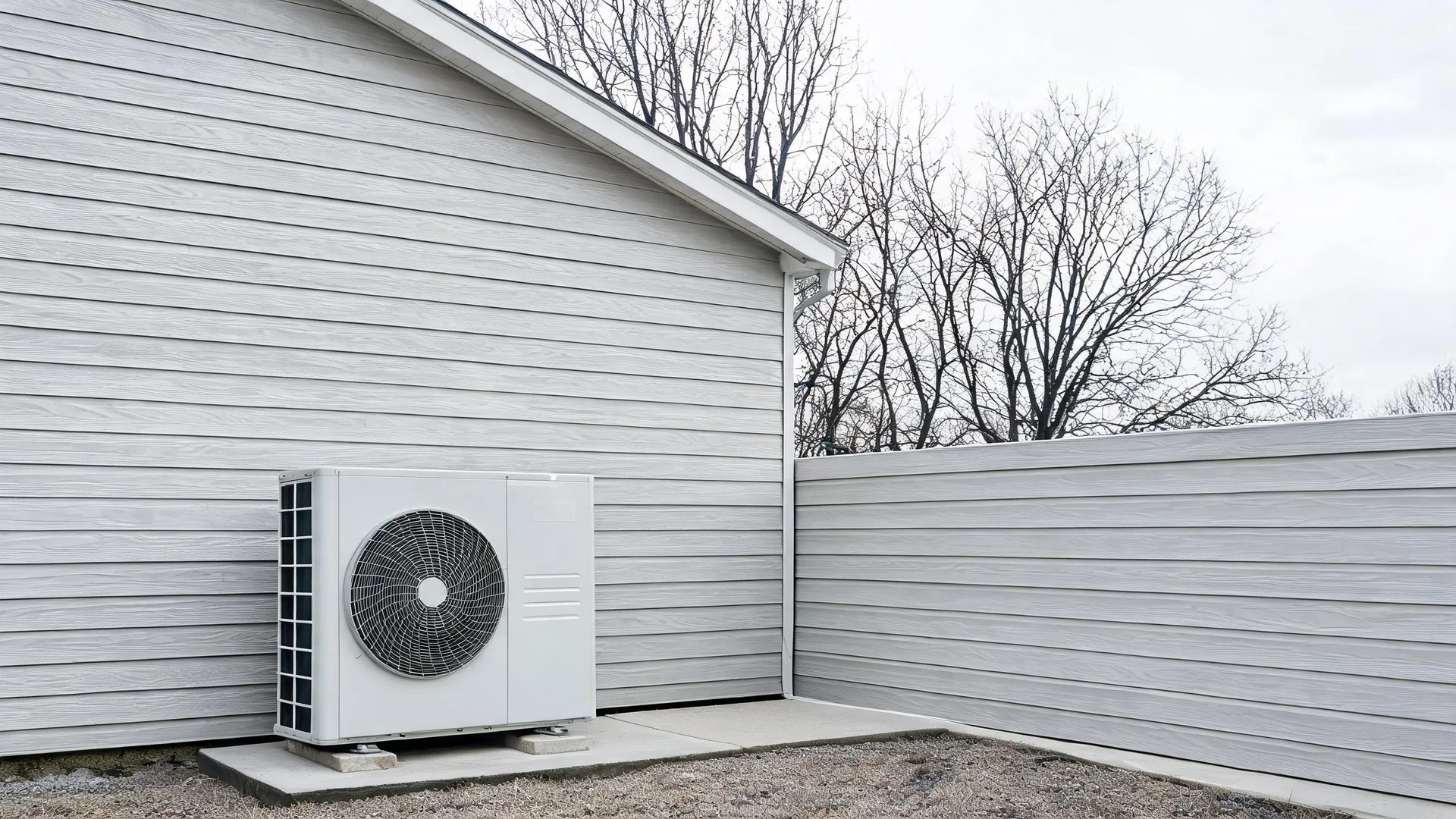
A gray heat pump outdoor unit mounted on a concrete pad next to a residential house with lap siding and stone accents.

What to check before you call

Before anyone comes out, check the simple things. Look at the thermostat first. Make sure it's set to the mode you want and the batteries aren't dead, a thermostat that lost power will sometimes default to a setting you didn't choose. Next check the air filter. A filter clogged with dust chokes off airflow, and a heat pump starved for air will ice up or stop keeping up with the temperature you set. Go outside and look at the outdoor unit. Clear away leaves, grass clippings or anything piled against it, the coil needs open air moving through it to work at all. If you see ice covering the outdoor coil, that's worth noting, some frost in cold weather is normal and clears during a defrost cycle, but a coil fully iced over that isn't clearing points to a real problem. Check the circuit breaker too. A breaker that's tripped is something you can reset yourself, but if it trips again once you flip it, stop there and don't keep resetting it. None of this tells you exactly what's wrong, but it rules out the easy stuff before anyone has to take the cabinet apart.

A weak capacitor doesn't fix itself

A capacitor that's starting to go will push the compressor or the fan motor to draw harder to start up. Run it in that state long enough and the motor it's struggling to start can burn out. What would have been a capacitor swap turns into a compressor replacement.
A low charge gets lower

Refrigerant doesn't get used up, so if your heat pump is low, it's leaking somewhere, and the leak doesn't heal on its own. Keep running it short and the compressor keeps working against a charge that isn't there, which is how a slow leak ends in a compressor that has to be replaced instead of just recharged.

A heat pump in trouble usually tells you before it quits outright. Listen for it. A clicking at the outdoor unit when it tries to start and fails, or a hum with no fan movement, points to a capacitor losing its charge. Short cycling, where it kicks on and off every few minutes instead of running a full stretch, wears on the compressor and drives up wear faster than steady running would. Warm air coming out of the vents when it's set to heat often means the reversing valve isn't shifting the way it should. A hissing or bubbling sound near the lines can mean refrigerant escaping somewhere along the circuit. And if the system runs constantly without ever reaching the temperature you set, it's working against something, whether that's a dirty coil, a weak charge, or a motor that's lost its strength. Any one of these is worth a call. Several at once means don't wait.

A diagnostic visit starts outside at the unit itself, not with a clipboard of questions. A tech will pull the panel and check the capacitor and contactor first, since those fail often and fail fast once they start going. From there it's gauges on the refrigerant lines to see if the charge is where it should be, and a check of the reversing valve to see if it's actually shifting when it's told to. Temperatures get checked at the supply and return to see how much heat the system is actually moving, not just whether it's running. The coil gets a look too, since airflow problems hide behind almost every other symptom. Most of this takes less time than people expect, because the usual failures only live in a few places.