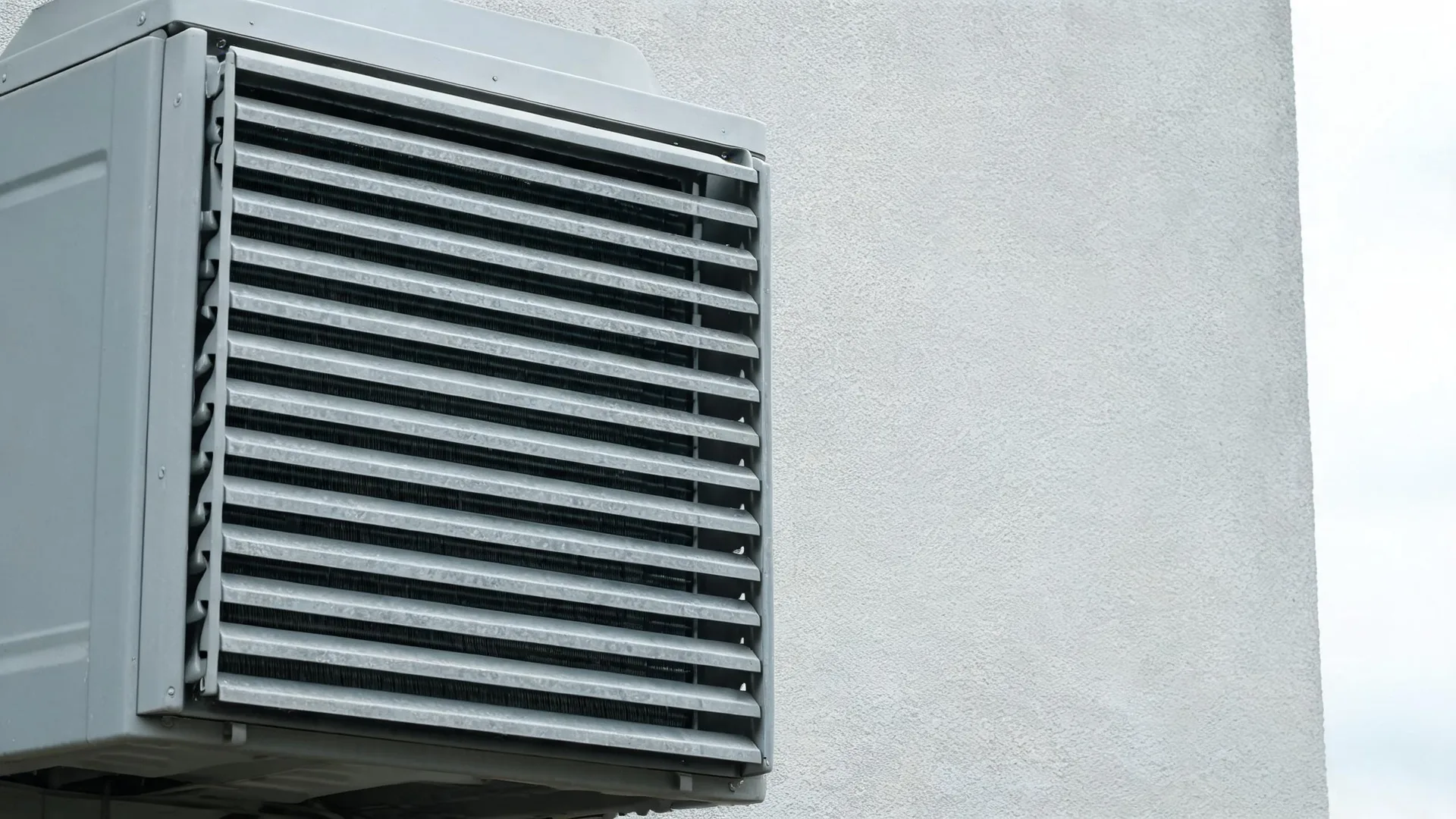
A grey outdoor HVAC unit mounted on a concrete pad beside the beige-sided exterior wall of a suburban house.

Heat Pump Repair in Bay St. Louis, MS

Tell us about the job

Takes about a minute. No obligation.

RepairHeat PumpHancock County, MS
Step 1 of 2

What ZIP code is the job in?

Half the homes in Hancock County were built in 1999 or later

Bay St. Louis sits in Hancock County, where half the housing stock dates to 1999 or later. A heat pump installed with one of those newer homes hasn't been running as long as the county's older systems, and likely still has working life left in it.

A younger system is worth fixing

When a heat pump still has years ahead of it, a bad capacitor or a failed sensor is a repair, not a reason to replace the unit. Get the actual problem diagnosed before assuming otherwise.

5 months
November through March, your system heats
7 months
April through October, it cools
43°F
the average winter night it heats against
90°F
the average summer afternoon it cools against
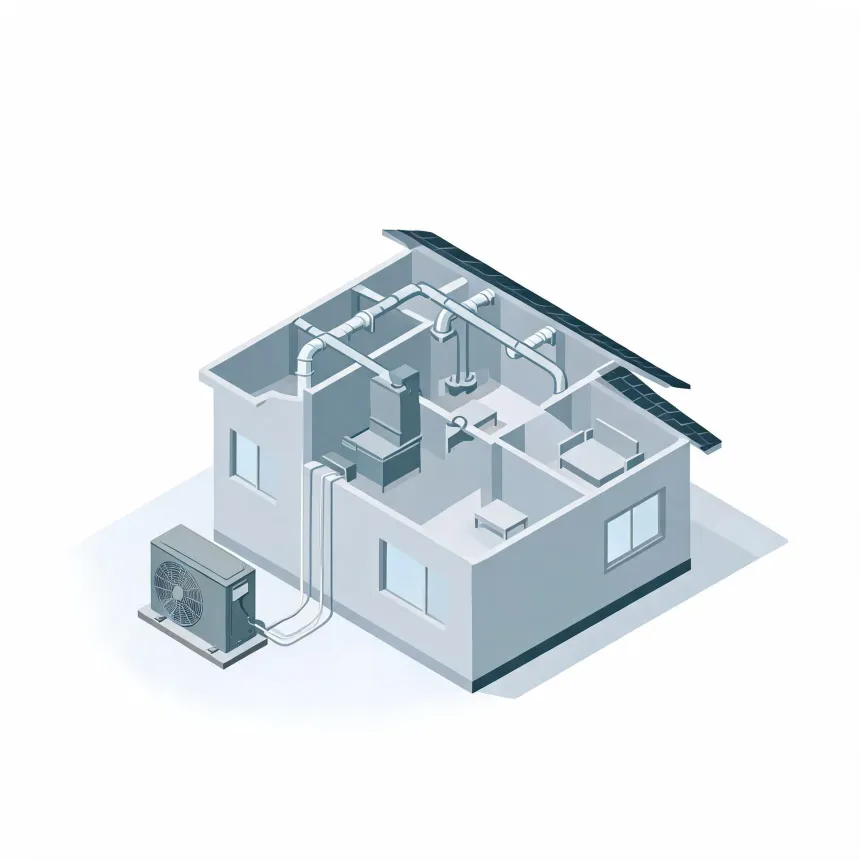
Isometric cutaway illustration of a single-story house showing interior ductwork, an air handler and rooms, with an outdoor condenser unit connected by refrigerant lines on a plain white background.
Your system heats November through March and cools April through October.

NOAA nClimDiv, 1991–2020 normals

A heat pump that holds its repair and runs through the season without the same problem coming back is worth fixing.

One that keeps tripping the breaker or freezing back up after a repair is telling you the real cause is still there.

A heat pump in Hancock County barely gets a break

Cooling runs April through October
Heat runs November through March
Power costs 13.39 cents a kWh statewide

If your heat pump is acting up and the house it's in was built recently, get a repair diagnosed before you assume the worst. A capacitor, a sensor, a stuck reversing valve, these fail on new equipment too, and fixing them is usually the right move when the unit still has years ahead of it. The one thing worth checking first is whether the system is original to the house or came later. Either way, a contractor can tell you which parts are worn and which still have life left.

Repair it

If your system came with a newer house, it likely has plenty of life left. Repair is usually the right call.

Find a contractor
A dark gray heat pump unit mounted on a concrete pad next to a house with gray siding and a stone veneer wall.

It runs every day of the year, in both directions

A heat pump runs in both directions, year round, so it never really gets the down time a furnace or an air conditioner gets on its own. That reversing valve is switching the cycle back and forth, and the outdoor coil is working through defrost cycles whenever it's cold enough outside. Short cycling is usually the first thing an owner notices, the unit kicking on and off in quick bursts instead of running a full cycle. Ice building up on the outdoor unit and staying there instead of clearing during defrost is another. So is air coming out of the vents that's barely warm, or barely cool, like the system is running but not doing much. A breaker that trips more than once isn't something to reset and ignore. Any of these is the system telling you a part failed, not that the whole unit is done.

A failing part pulls other parts down with it

A reversing valve that's stuck forces the compressor to work against a cycle that isn't switching right. A weak capacitor makes the compressor or fan motor draw more current than it should every time it tries to start. Run that way long enough and the strain moves from the part that failed to the parts around it. A repair that was simple at the start stops being simple.

Ice and heat don't wait for a good time

A coil that's icing over blocks airflow more with every cycle it runs. A compressor working through refrigerant that's low doesn't just perform worse, it runs hotter than it's built to. Neither one clears up by staying on. Shutting the system off when something seems wrong buys the part time. Leaving it running uses that time up.

A few things are safe to check yourself before anyone comes out. Look at the outdoor unit and clear away anything blocking it, leaves, mulch, a grill pushed too close. Check the filter and swap it if it's dirty, a clogged filter chokes airflow and makes the whole system work harder on both sides. Look at the breaker, if it's tripped, reset it once, but if it trips again, leave it off and call. Check the thermostat batteries and settings before assuming the unit itself is at fault. What you shouldn't touch is the refrigerant lines, the reversing valve, or anything inside the outdoor cabinet. Those need a gauge set and a reason to be opened, not a guess.

A tech starts outside at the unit, with a gauge set on the refrigerant lines. Pressure that's too low or too high points to a different problem, and the gauges show which one. The capacitor and contactor get tested next, because a weak capacitor can look like a dead compressor until someone actually checks it. If the system is heating when it should cool or the other way around, the reversing valve gets tested too. Inside, the coil gets checked for ice or dirt, and the blower motor gets watched for how hard it's working to move air. A meter goes on the wires more than once, since electrical readings catch things a visual check misses. The point of all of it is to find the one part that failed and confirm the rest of the system held up while it did.