






Low-angle view across a lawn and pine-needle mulch toward a single-story brick house with a dark hipped roof and covered porch, framed by pines and a moss-draped oak branch.

Heat Pump Maintenance in Southaven, MS

Tell us about the job

Takes about a minute. No obligation.

Tune-up, service, or cleaningHeat PumpDeSoto County, MS
Step 1 of 2

What ZIP code is the job in?

A heat pump that needs a look doesn't always quit outright. It just stops working the way it used to. Notice the air coming from the vents feels less warm than it should in heating mode, or the system runs longer than it used to without quite catching up to the thermostat setting. Ice building up on the outdoor unit beyond what a normal defrost cycle clears is another one. So is a unit that switches between heating and cooling on its own, or short cycles, turning on and off in quick bursts instead of running a full cycle. Listen for it too. A new rattle, a hum that wasn't there before, or a clicking that continues after startup usually means something loose or worn is asking for attention before it becomes something broken.

A failing contactor or a weak capacitor won't show up until the compressor fails to start.

A tune-up catches the part before it leaves you without heat on the coldest morning.

Half the homes here were built since 1999, young enough that most heat pumps are still original

Half the homes here were built by 1999
Climate zone 3A
Power costs 13.39 cents a kWh statewide
Still original. Worth keeping that way.If yours came with the house, a yearly check is what keeps it that way.

DeSoto County logged 99 severe weather events between 2015 and 2024, and most of that was wind and hail aimed straight at the outdoor unit sitting in the yard. Wind drives branches and grit into the coil fins and the fan. Hail dents the cabinet and can bend the fins enough to choke airflow. Nearly a third of Mississippi households went at least a day without power last year, and a heat pump that loses power mid-cycle restarts into whatever shape the storm left it in. Have the outdoor unit checked for bent fins, loose panels and debris before the next one comes through.

Keep it in good shape

If your system is fairly new, a yearly check keeps it in good shape for longer.

Find a contractor
A man in a dark shirt, tan pants and a cap carries a canvas tool bag up wooden porch steps toward a blue front door, with a potted shrub beside the entry.
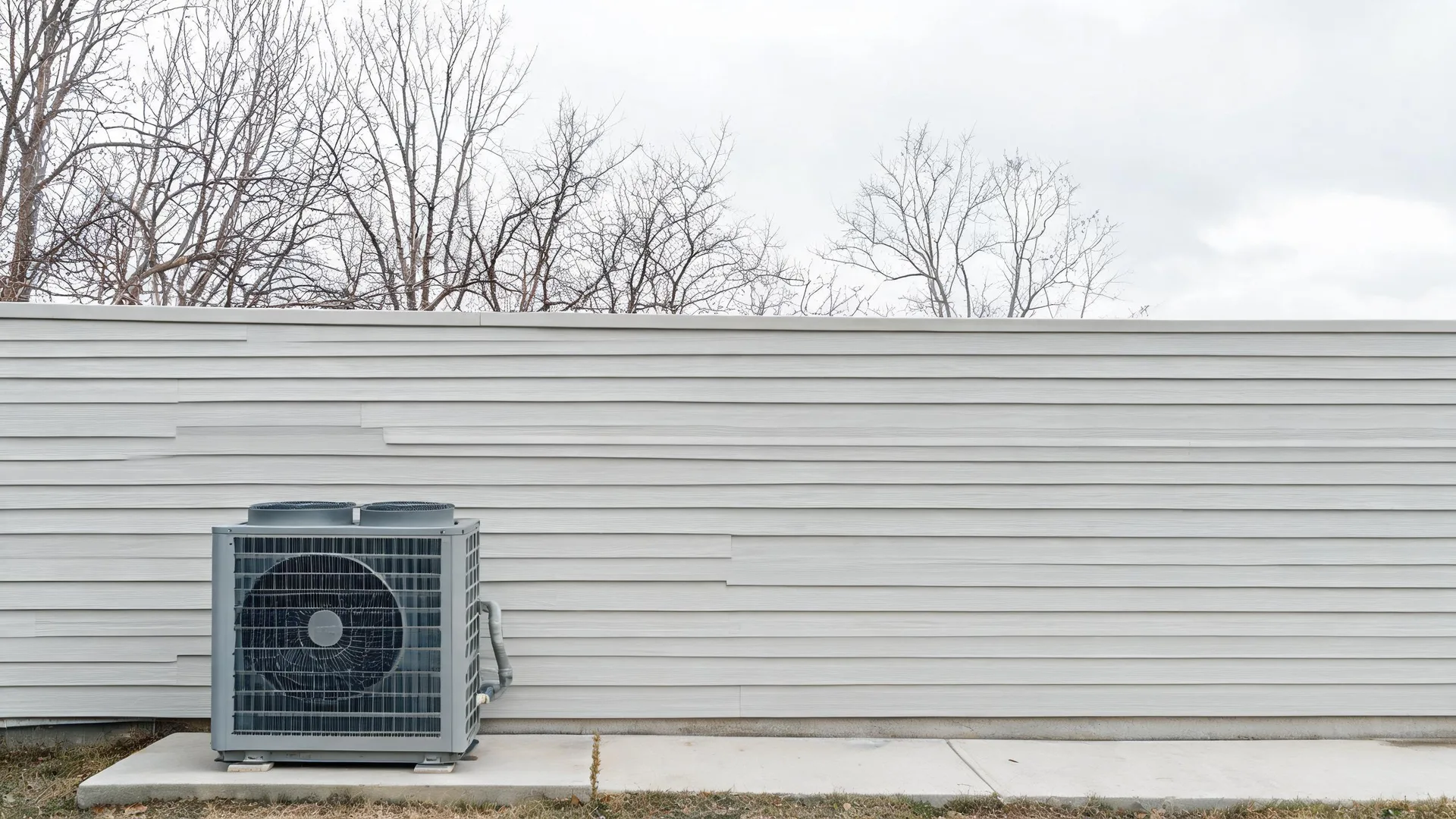
A residential heat pump outdoor unit mounted on a concrete pad next to a house with gray vinyl siding.

No season off means no season to skip

A heat pump doesn't get downtime the way a furnace does. It heats one month and cools the next, so the compressor and outdoor fan keep working all year with no real break. Skip the yearly check and the small things go unnoticed first. A coil coated in dirt makes the system push harder to move the same heat. A refrigerant charge drops a little and stays that way. A capacitor weakens but hasn't failed yet. None of that stops the system right away. It just means the compressor runs longer and hotter to do the same job, month after month, and that kind of strain is what wears one out early.

Keep the outdoor unit clear

Grass clippings, leaves and mulch pile up against the outdoor unit and block airflow through the coil. Keep at least a couple feet clear on all sides, and pull anything growing up against it back. Rinse the coil fins with a garden hose from the inside out when you see dirt built up on them, but skip anything stronger than a hose. A bent fin or a cracked line is a repair, not a cleaning job.
Know what to leave alone

The filter is the one part you can handle on your own, and a dirty one makes the whole system work harder for less heat. Check it monthly and swap or wash it per the manufacturer's directions. Past that, stay out of the cabinet. Refrigerant, wiring and the board behind the panel need a gauge set and training to touch safely, and opening it up yourself can void the warranty even if nothing goes wrong.

The filter sits between the return air and the indoor coil, and everything downstream depends on it staying clear. A clogged filter starves the coil of airflow, and a heat pump moves heat by moving air, so less air means less heat delivered for the same run time. Starve it long enough and the indoor coil can ice over even when the outdoor coil's defrost cycle isn't the problem. The outdoor coil has its own job, shedding heat in summer and pulling it from the outside air in winter, and dirt or grass clippings packed into the fins slow that exchange the same way a dirty filter does. The condensate drain is the quiet one. It only matters in cooling mode, and when it clogs the water backs up into the pan and sometimes into the cabinet or the ceiling below it. None of these fail loudly on their own. They just make the compressor work harder to hit the same setpoint, and that extra strain is what shortens its life.

A tune-up starts outside with readings a filter change can't give you. The tech checks refrigerant charge against what the system calls for, because a unit low on charge still runs, just longer and colder than it should in heating mode. Electrical connections get tightened, since a loose one generates heat at the connection point and that heat degrades the wire over time. The contactor and capacitor get tested under load rather than just looked at, because both can read fine sitting still and still fail the moment the compressor tries to start. The reversing valve gets checked too, since that's the part that switches a heat pump between heating and cooling, and a valve that sticks halfway leaves you with a system blowing room-temperature air in either mode. Outside, the coil gets cleaned and the fan motor gets checked for play in the bearings. Inside, static pressure gets measured across the coil and the ductwork, because that number tells you if something downstream is restricting airflow in a way a dirty filter alone wouldn't explain.