Low-angle view along a red brick wall with flowering pink shrubs at its base, a mown lawn extending to a distant single-story house and tall pine trees under an overcast sky.

Heat Pump Maintenance in Pascagoula, MS

Tell us about the job

Takes about a minute. No obligation.

Tune-up, service, or cleaningHeat PumpJackson County, MS
Step 1 of 2

What ZIP code is the job in?

Signs the system is asking for a look

A heat pump that runs long stretches without warming or cooling the way it used to, short cycles on and off, or blows air that feels wrong for the setting is telling you something. Ice on the outdoor unit when it has no business being there, a hissing or grinding sound from the cabinet, or a sudden jump in how long it takes to reach the set temperature are all reasons to have it checked before the part behind the symptom fails outright.


Why catching it early matters

A heat pump under strain doesn't just work harder, it wears faster. A dirty coil or a low refrigerant charge makes the compressor run longer to do the same job, and a compressor that runs longer dies sooner. Catching the early signs means a contractor is cleaning a coil or replacing a capacitor instead of replacing the compressor itself.

A quick visit checks the refrigerant pressure and calls it done.

A thorough one pulls the panels, checks the contactor and capacitor, and washes the outdoor coil instead of just rinsing it off.

A heat pump that works year-round in Jackson County earns a check every March

Cooling runs April through October
Heat runs November through March
Power costs 13.39 cents a kWh statewide

Half the homes in Jackson County were built in 1984 or later, so there's a good chance yours is one of them. A heat pump installed in a newer home still has a lot of working life ahead of it, and a yearly check is what keeps it on track to use all of it. The coil stays clean, the refrigerant charge stays correct, and the electrical connections get caught loosening before they cause a breakdown. Skip that check for a few years and the same system starts the slide toward early failure that an older, neglected one is already on.

Book it before the season

It starts running hard in the first month of the season here. Book the check the month before.

Find a contractor
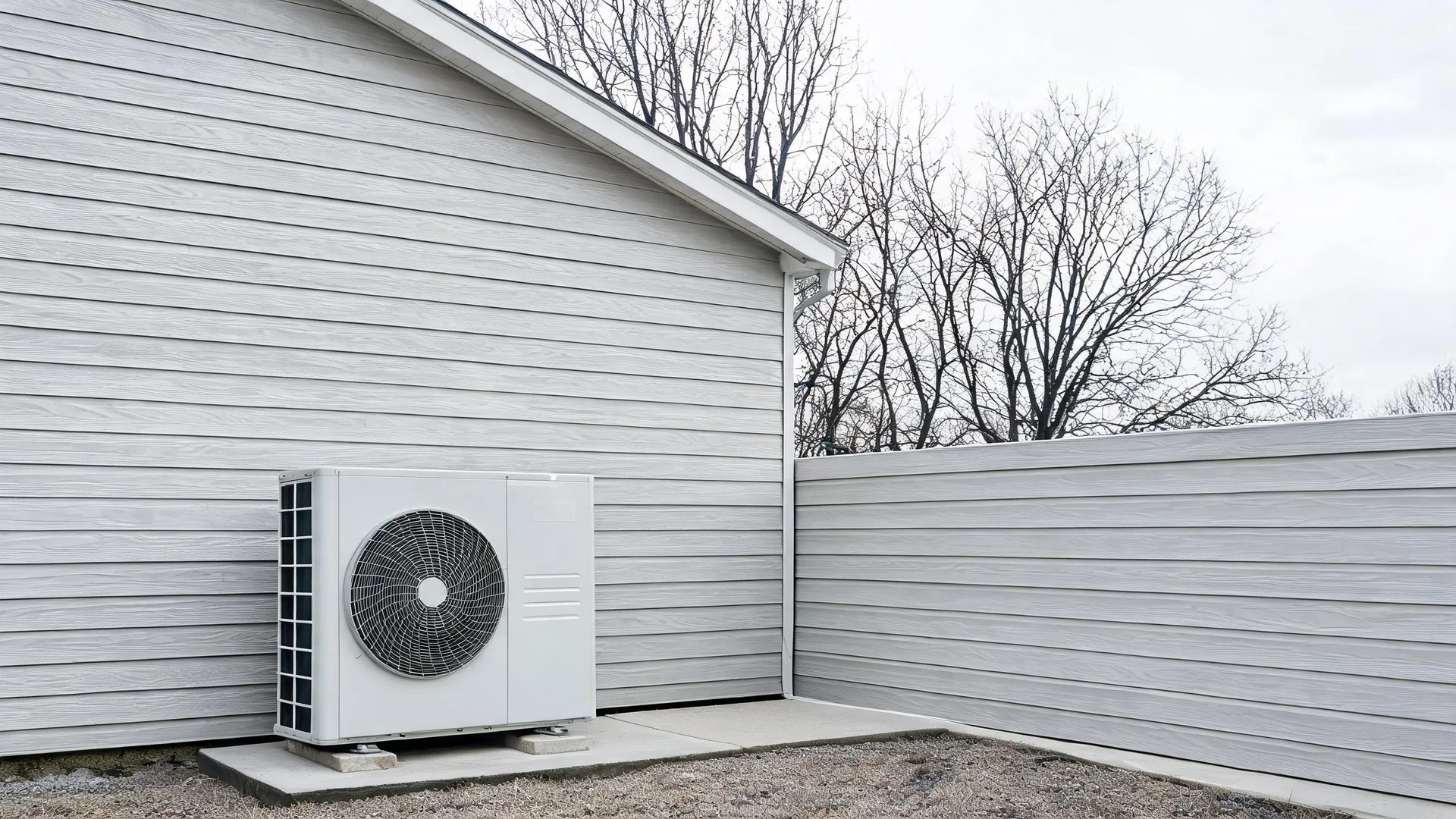
A gray heat pump outdoor unit mounted on a concrete pad next to a residential house with lap siding and stone accents.

What's yours to do between checks

Keep the outdoor unit clear. Grass clippings, leaves, and anything that blocks airflow make the coil work harder to move heat, and that strain carries straight to the compressor. Check the air filter and swap or rinse it when it looks dirty, since a clogged filter is the most common reason a heat pump runs long and still can't hit the set temperature. Walk past the outdoor unit now and then and look for ice. A heat pump defrosts itself on a normal cycle, but ice that builds up and stays means something underneath isn't right. Keep furniture and curtains off the supply and return vents inside so air moves the way the system expects. None of this replaces a contractor pulling panels and checking the refrigerant charge, but it keeps the system from working harder than it has to between those visits.

What keeps failing quietly

A heat pump that never gets looked at keeps running even as the coil cakes with dust and the refrigerant charge drifts low. It doesn't shut itself off. It pulls more current and runs longer to make up the difference, and the compressor absorbs that strain every cycle. Reversing valves stick from disuse. Defrost sensors drift out of calibration. Nothing announces itself until the system can't keep up.

Why the failure looks sudden

The compressor doesn't wear down in a way anyone can see. It runs hot and strained for months, sometimes longer, and then one day it doesn't start. By the time a homeowner notices the house isn't heating or cooling right, the part that failed is usually the one a yearly check would have caught long before it got there.

The filter sits between the return duct and the blower, and everything downstream depends on it staying clear. A clogged one starves the system of airflow, so the coil behind it runs colder than it should and picks up ice instead of shedding moisture the way it's supposed to. That same restriction makes the blower motor work harder to push the same amount of air, and a motor that strains all season doesn't last as long as one that never had to. The outdoor coil has its own job, moving heat in or out depending on the mode, and a season of dust and pollen across its fins makes it work the same way a dirty filter does, just on the other side of the system. The condensate drain matters less for comfort and more for the cabinet itself. A line that clogs backs water up into the unit, and that water finds the electrical components before anyone notices a drip.

A tune-up starts with the filter and the coils, but a heat pump has a second job a furnace doesn't, so the check covers more ground. The reversing valve that switches the system between heating and cooling gets tested in both directions, since a valve that sticks halfway leaves the house warm when it should be cool or the other way around. The defrost control gets checked too, the sensor and the board that tell the system when to melt ice off the outdoor coil and when to stop. If that timing drifts, the unit either frosts over because it isn't defrosting enough or wastes energy defrosting when it doesn't need to. A proper visit also checks the refrigerant charge against what the system calls for, not just whether pressure is present, because a heat pump running low still blows air, just not at the temperature it should. The contactor and capacitor get tested under load, since those are the parts that wear out quietly and take the compressor down with them when they fail.