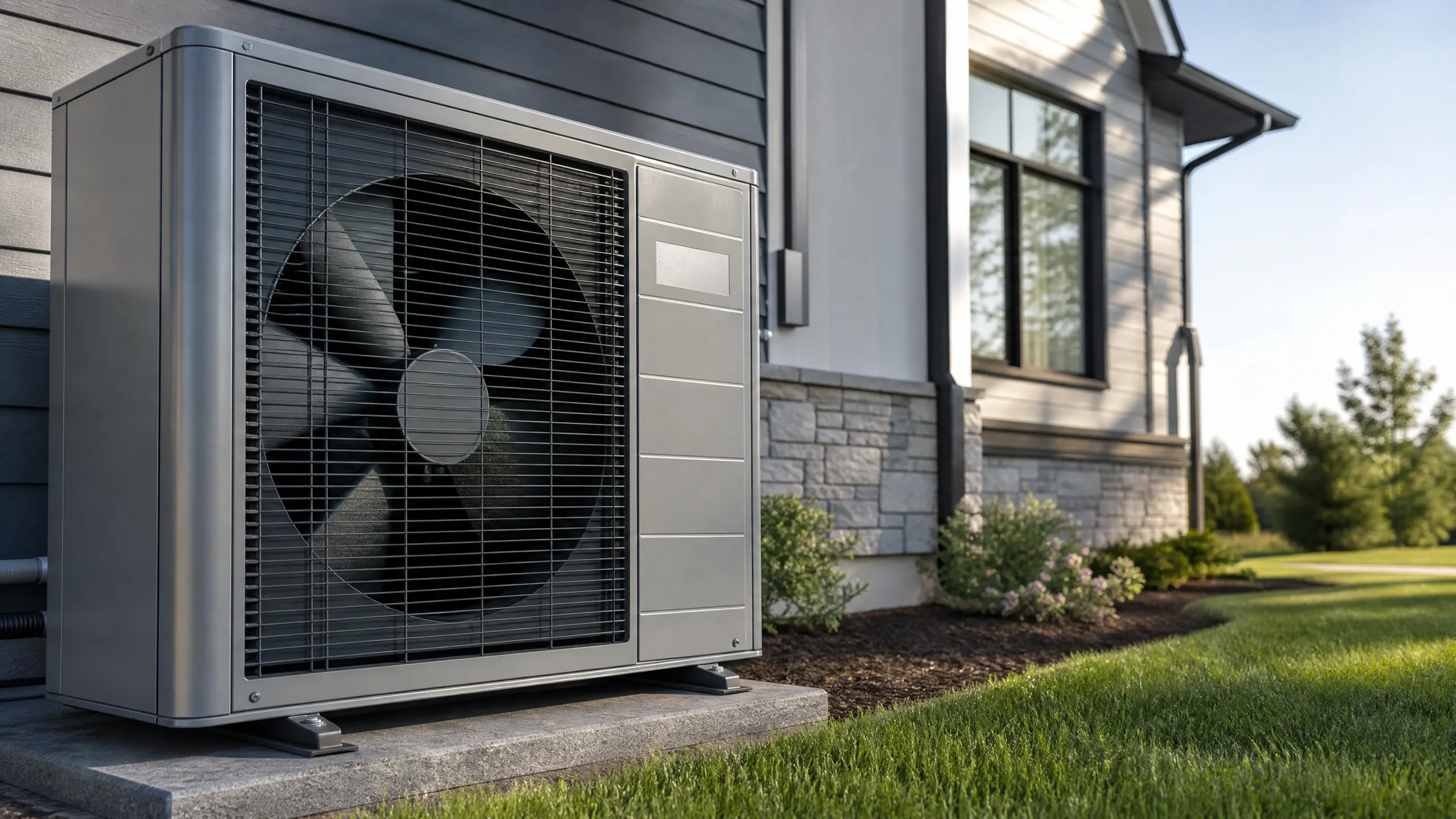






A grey heat pump outdoor unit mounted on a concrete pad against the exterior wall of a house with grey siding and stone veneer.

Heat Pump Installation in Tupelo, MS

Tell us about the job

Takes about a minute. No obligation.

New system or replacementHeat PumpLee County, MS
Step 1 of 2

What ZIP code is the job in?

Tupelo sits in climate zone 3A, long summers and a short, mild winter. A heat pump installed here now has to hit at least 14.3 SEER2 for cooling and 7.5 HSPF2 for heating. That's the federal floor for this equipment, not something added on for this region. It narrows what a contractor can legally install, so any system you're comparing should already meet it. A federal tax credit is available on qualifying installations, worth checking against the unit in front of you.

5 months
November through March, your system heats
5 months
May through September, it cools
34°F
the average winter night it heats against
90°F
the average summer afternoon it cools against
Isometric line illustration of a cutaway house showing interior rooms with furniture, ceiling ductwork connected to an indoor air handler, and a line running outside to an outdoor condenser unit.
Your system heats November through March and cools May through September.

NOAA nClimDiv, 1991–2020 normals

Mississippi power runs 13.39 cents a kilowatt-hour, below what most of the country pays.

The top-tier SEER2 model takes longer to earn back its price here, so pick the heat pump for what it can handle, not just its rating.

Tupelo sees its share of wind and hail. A standard heat pump handles both fine.

94 damaging wind events from 2015 to 2024
35 hail events from 2015 to 2024
Power costs 13.39 cents a kWh statewide

More than half the homes in Lee County heat with electricity, and a heat pump fits right into that. Gas heats about four in ten homes here, and those homeowners usually keep the furnace and pair a heat pump with it for the cooling side, or run it as backup heat on the coldest nights. Only a small share use bottled or LP gas. If your house already runs on electric heat, a heat pump installation is mostly a straight swap, and the electrical work behind it is likely already in place.

Get it installed before May or November, while there's time to do it right

Cooling starts in May here and heat comes on in November, so a heat pump installed now gets a full season's grace before either one kicks in. Get it in during April or October and the contractor is working on an empty schedule instead of a storm-damage one, and you get a system that's already proven itself before it has to carry the house through a Tupelo summer or a cold snap.

Find a contractor
A man in a cap, gray long-sleeve shirt and brown work pants walks up porch steps toward a dark blue front door, carrying a canvas tool bag with tools in its side pockets, beside a potted shrub.
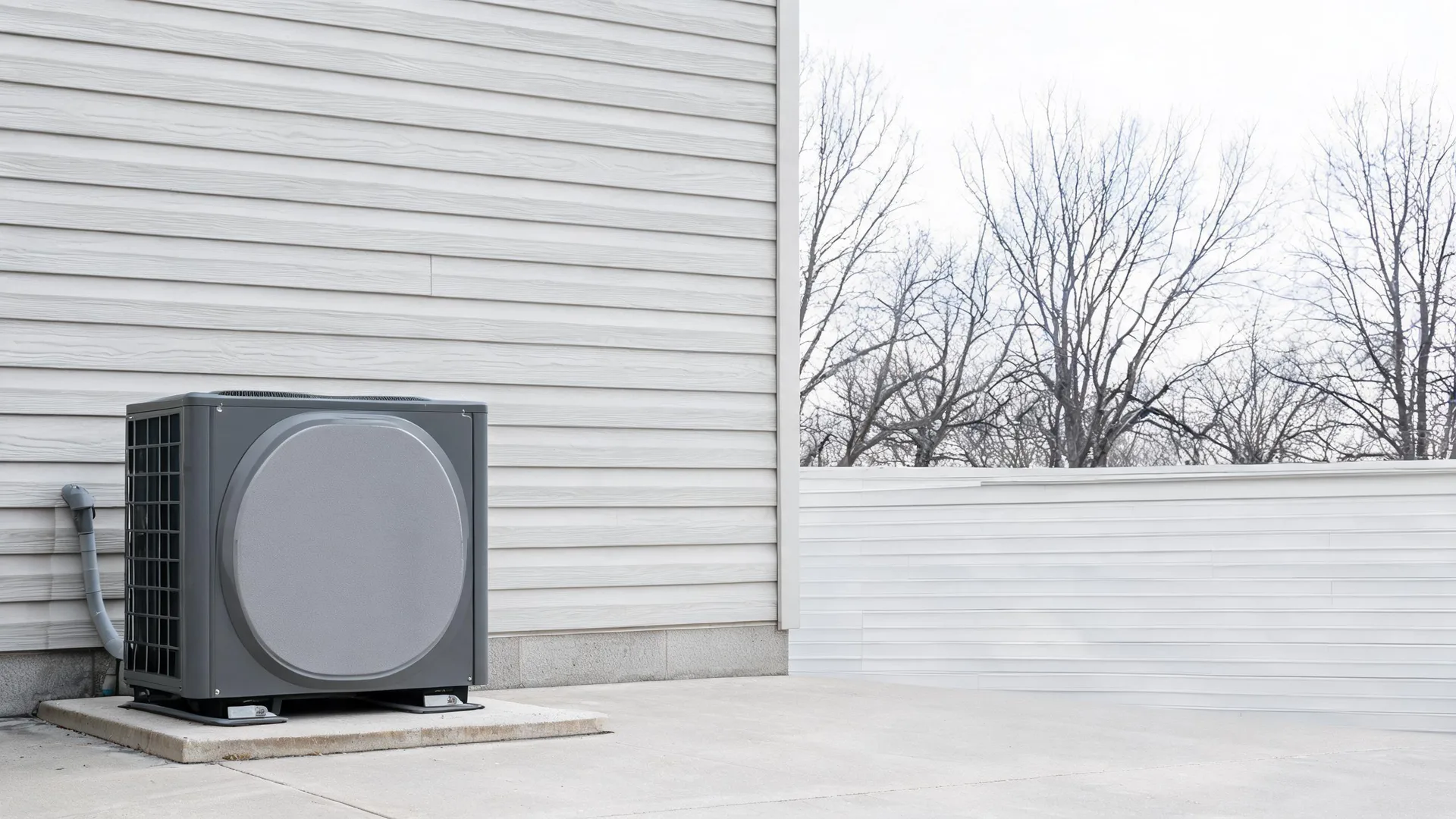
A gray heat pump condenser unit mounted on a concrete pad against the gray lap-siding exterior wall of a house.

The number on the label assumes a clean system

That SEER2 and HSPF2 number on the label is measured in a lab, with a compressor that isn't fighting a dirty coil or a clogged filter. The number holds up best when the system is maintained the way it was built to run. A heat pump works harder than a straight AC unit because it's never really off duty. It runs for cooling, then switches over and carries the heating load too, so the coil, the compressor and the filter all see more hours of work across a year than they would in a cooling-only system. Dirt on the outdoor coil or a filter that's gone gray makes the compressor work harder to move the same amount of air, and that gap between the rated efficiency and what you actually get only grows over time if nothing gets cleaned or swapped out. Keeping that rating close to real means keeping the filter changed and the outdoor coil clear of leaves and grass clippings, nothing more complicated than that.

The sizing decides more than the equipment

A heat pump has to be matched to the house, the ductwork, and how much heat moves through the walls and windows. Get that load calculation wrong and an oversized unit cycles on and off without ever running long enough to pull the humidity down, while an undersized one runs constantly and still can't keep up on the coldest nights. The labor to size it right is part of what's being paid for, not just the equipment sitting on the pad outside.
What's already there changes the job

If the ductwork, the electrical panel, and the line set are already sized for a heat pump, the crew is swapping equipment and little else. If the panel needs more capacity, the ducts leak or run too small, or the old system used a different refrigerant line, that work has to happen before the new unit can run the way it's rated to. Houses with the same heat pump going in can take very different amounts of work to get there.

Ask what the sizing is based on, not just what size the old system was. A contractor should walk the house, or ask enough about it, before naming a number. Ask what happens to the existing ductwork, since a heat pump moves a different volume of air than a furnace, and leaky or undersized ducts will hold the new system back no matter what it's rated for. Ask about the backup heat plan for the coldest nights, whether that's the heat pump alone, a furnace already in place, or electric strip heat built into the air handler, because that changes what the system costs to run when it's working hardest. Ask what refrigerant it uses, since older systems and new ones don't always match, and that affects whether the existing line set can stay or has to be replaced. And ask what the warranty covers, parts or labor or both, because those terms rarely run the same length.

Install day starts with the old equipment coming out, indoor and outdoor both, along with the line set if it isn't staying. Once the pad outside is clear, the new outdoor unit goes down and gets leveled, because a unit that sits tilted wears its compressor mounts unevenly over time. Indoors, the air handler or coil gets set, the line set gets connected, and the whole system gets pressure tested before anyone adds refrigerant, so a joint that's going to leak shows up now instead of after the drywall's closed up. The crew pulls a vacuum on the lines to clear out moisture and air, since either one left behind will shorten the compressor's life. Once it's charged, they run the system in both directions, cooling and heat, and check the temperature split at the vents to confirm it's moving the air it should. A load calculation and a permit inspection usually bookend the whole thing, one before the work starts and one after.